
Towven.com – Picture a wedding. The room is warm, someone near the front is already crying, and two families sit on opposite sides of the aisle, watching each other carefully.
It looks like a love story. But the origin of marriage is a very different tale, and it starts long before rings, priests, or vows.
Why Humans Get Married: A Survival Problem
The question of why humans get married begins with a newborn baby. A human baby cannot walk, hold up its head, or feed itself. A baby chimpanzee clings to its mother within days, but a human baby is born almost unfinished, because its brain is so large that it has to arrive early or it would not fit through the birth canal.
That early arrival has a cost. A human child needs care for ten years or more before it can survive on its own.
On the African savanna, with no shops, no doctors, and no walls, one mother alone had to find food, protect herself, and keep a helpless child alive for a decade. Almost nobody could do that alone.
Cooperative Breeding: Raising Children as a Team
Our ancestors solved the problem with cooperative breeding, which simply means raising children as a team. Grandmothers helped. Aunts helped. Older siblings helped. And fathers, unlike in most animals, stayed and helped too.
That last part is rare. Only about three to five percent of mammal species form lasting partnerships between a male and a female.
Most mammals mate and walk away. Our ancestors learned that a child with two committed adults was far more likely to live.
Pair Bonding: The First Seed of Marriage
This long-term bond between two adults is called pair bonding, and it was the first seed of marriage. It was not a ceremony or a contract. It was an arrangement that said: stay, share food, and help raise what you made.
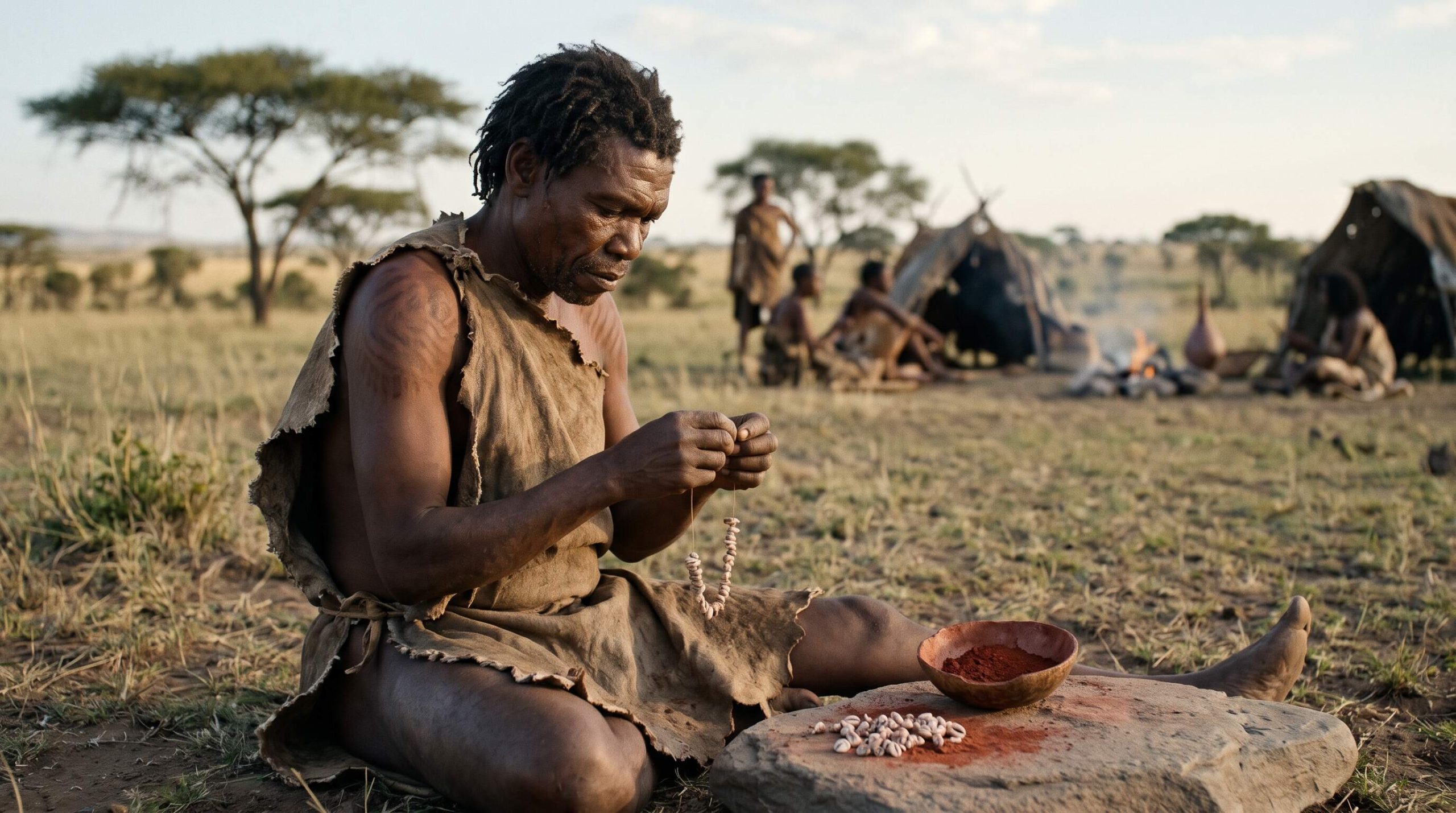
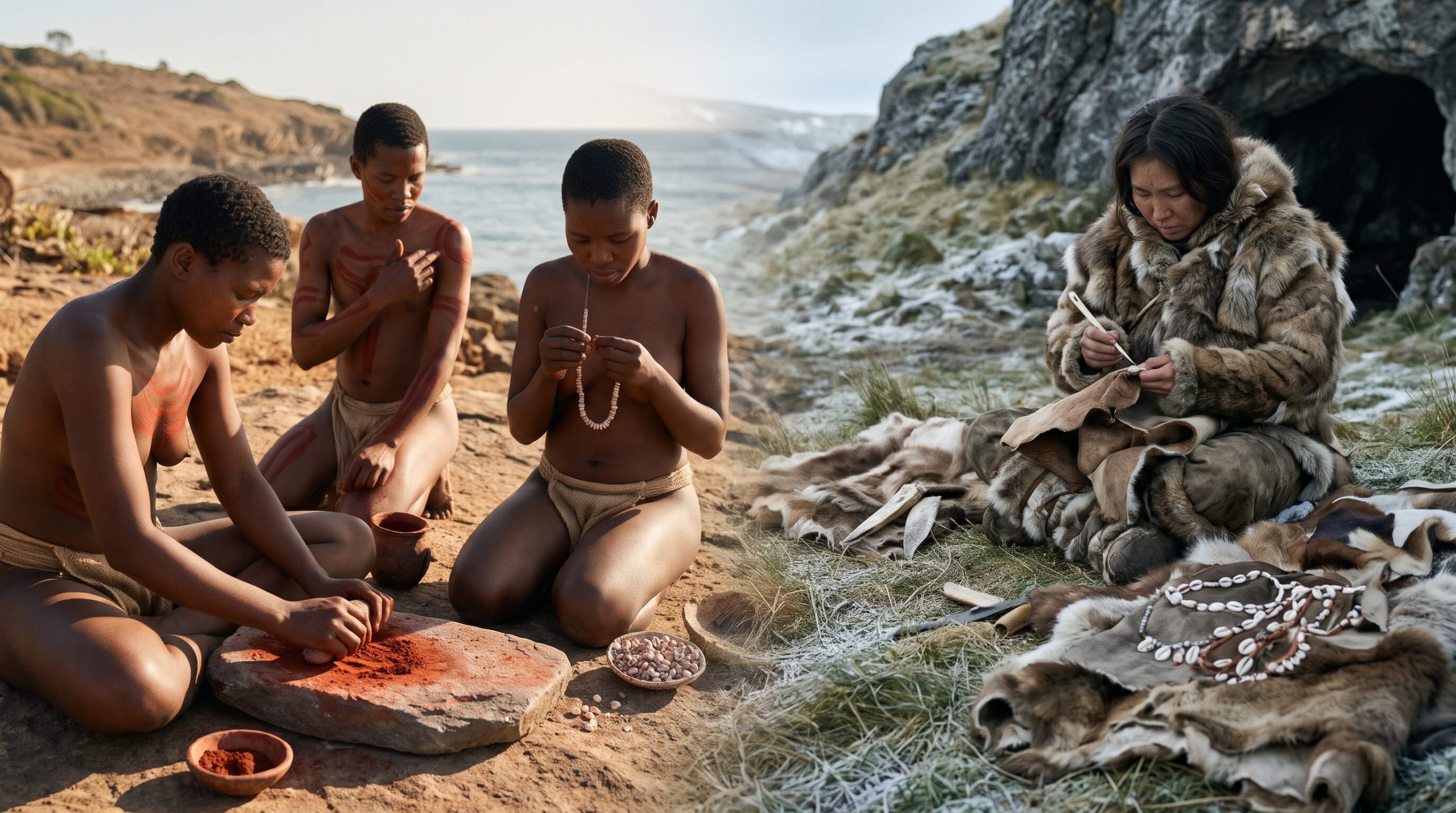
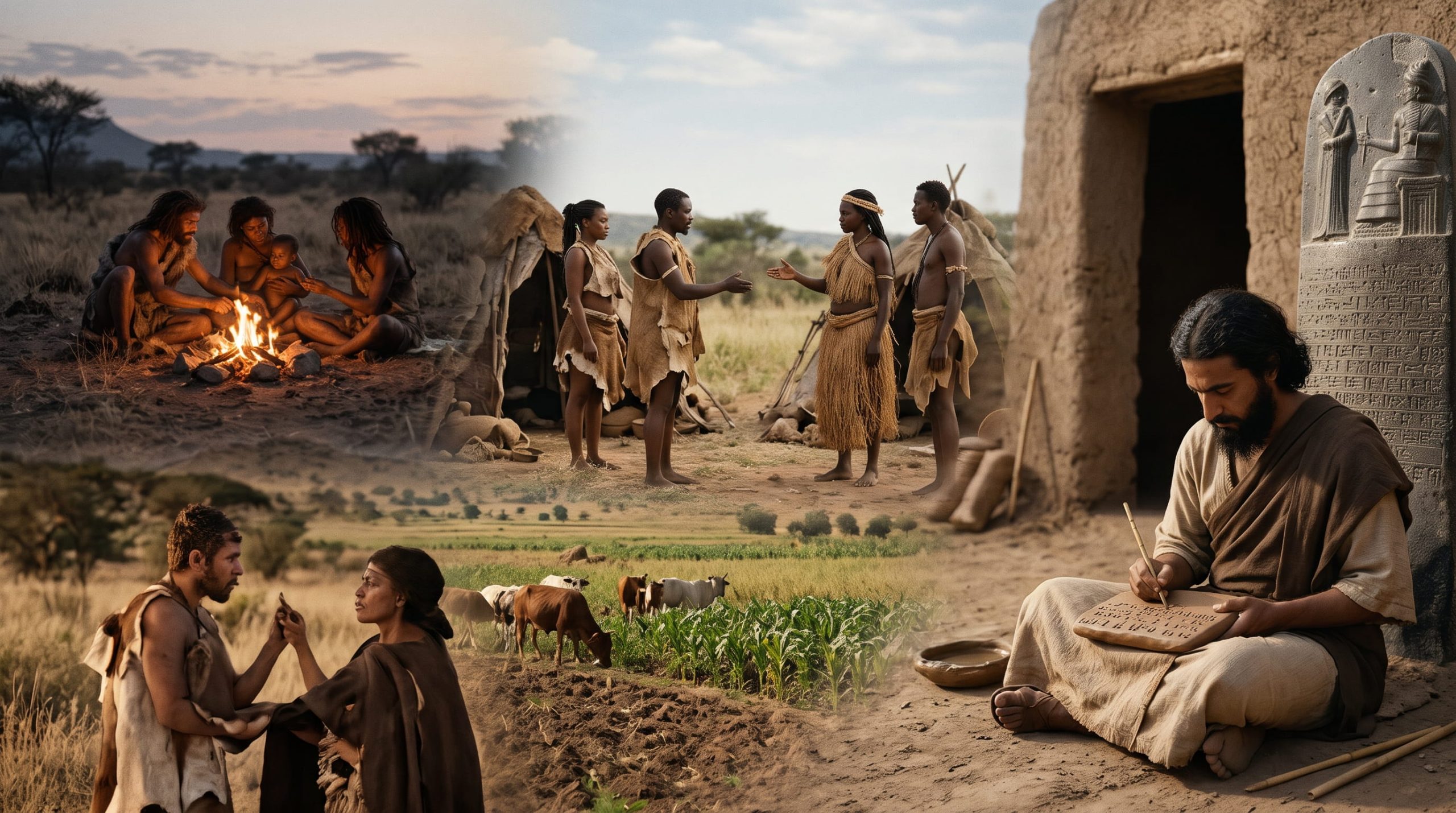
This is how marriage most likely began. There was almost certainly no cave wedding or ritual fire. Researchers study living hunter-gatherer groups such as the Hadza of Tanzania and the Ju/’hoansi of the Kalahari Desert to get clues.
These people are not living fossils, and they are not a perfect window into the past, but their way of life offers the best available hints. Among many of these groups, a couple simply starts sharing a shelter and a fire, and the group begins treating them as a pair. No crowd, no speech, no ring.
How Marriage Began Its Shift From Bond to Treaty
So where did the pressure of the modern wedding come from? From the other family. When we look at how marriage began to grow beyond the couple, the answer is exogamy, which means marrying someone from a different group.
Imagine a small band of thirty or forty people, all related. Marrying only inside the band would slowly weaken the group, and a drought or failed hunting season could leave a band with nowhere to run.
By marrying outside the group, our ancestors gained relatives in the next valley. If their land dried up, they knew whose camp to walk to. A marriage became a treaty between two groups, not just a promise between two people.
The anthropologist Claude Lévi-Strauss argued that exchanging marriage partners was one of the oldest ways humans built peace, trade, and trust.
Not everyone agrees with every detail of his theory, but the core idea has held up well. It is much harder to fight people who are also your in-laws.
Ancient Marriage Customs: Proof You Had to Earn It
Among many hunter-gatherer groups, ancient marriage customs included bride service, where the groom worked for the bride’s family for months or even years.
He hunted for them, brought them meat, and showed day after day that he could feed a family. His marriage test was not a speech. It was a very long job interview.
The History of Marriage: From Survival to Property to Paperwork
The history of marriage changed again around ten thousand years ago, when people learned to farm. For the first time there were fields, animals, stored grain, and houses that stayed in one place.
Once wealth could be passed down, families began guarding who married whom. Customs like bride price and dowry appeared, and marriage became a way to protect property.
Then it became a written promise. On clay tablets from ancient Mesopotamia, scribes recorded marriage agreements more than four thousand years ago, and the laws of Hammurabi, around 1750 BCE, said a woman taken without a contract was not legally a wife.
So Did Love Exist?
Yes. Love was always there, felt through the same brain chemistry we have today, including oxytocin and dopamine. But love was not what made a marriage legal.
Love was what made it bearable, the glue that helped a treaty or arrangement survive for years. The idea that you should marry mainly for romantic love is surprisingly young, and in much of the world it became common only in the last two or three hundred years.
Why a Wedding Still Feels So Tense
That tension between the two families at a wedding is not random. It is a very old alarm. Our ancestors needed the approval of the other group to survive, so the brain still treats it as life or death. It is why meeting a partner’s parents makes your chest tighten.
The next time you watch two families face each other across an aisle, remember what you are really looking at: not just a love story, but a treaty and a survival strategy that was thousands of years old before the first word was ever written down.