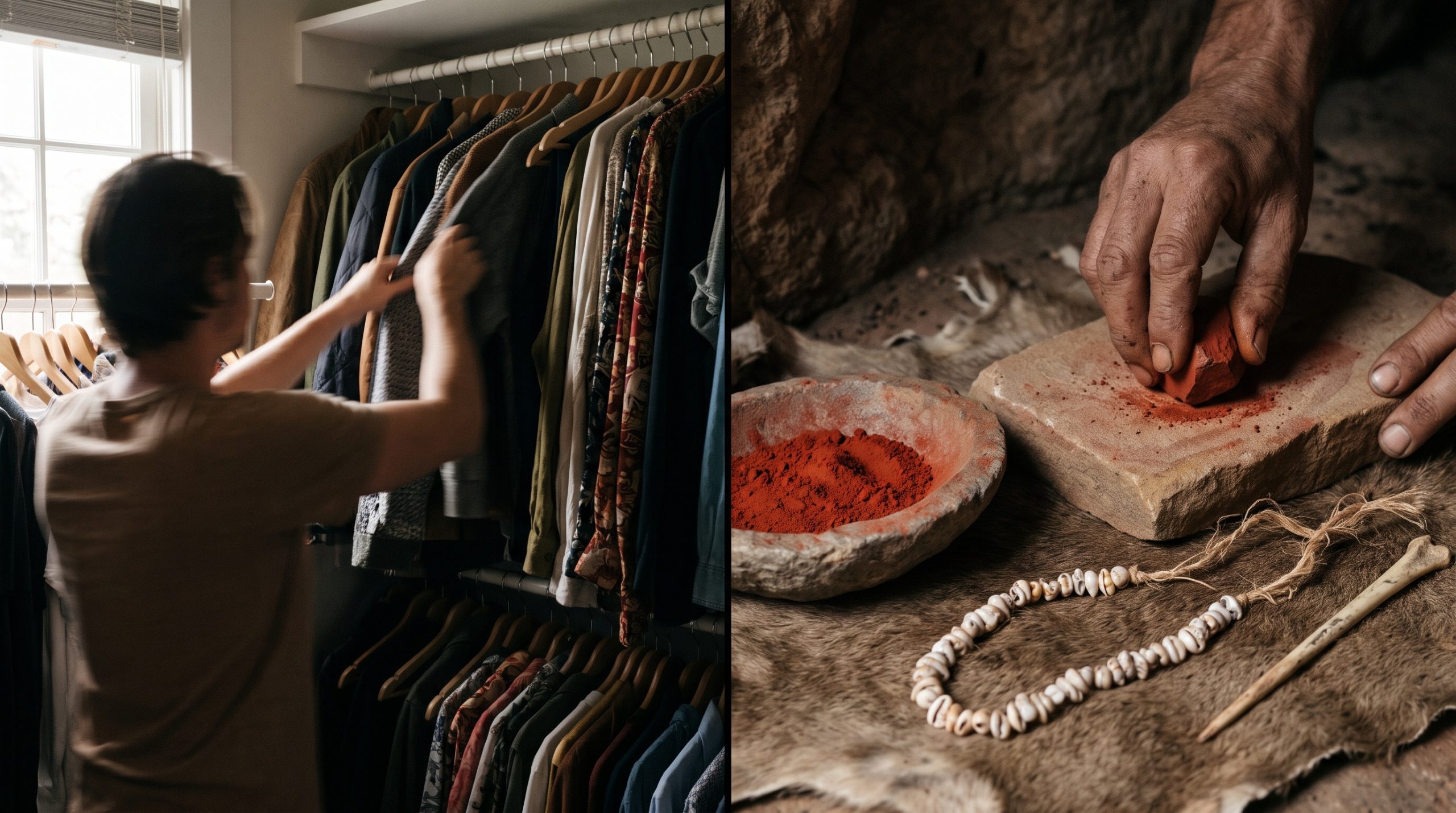





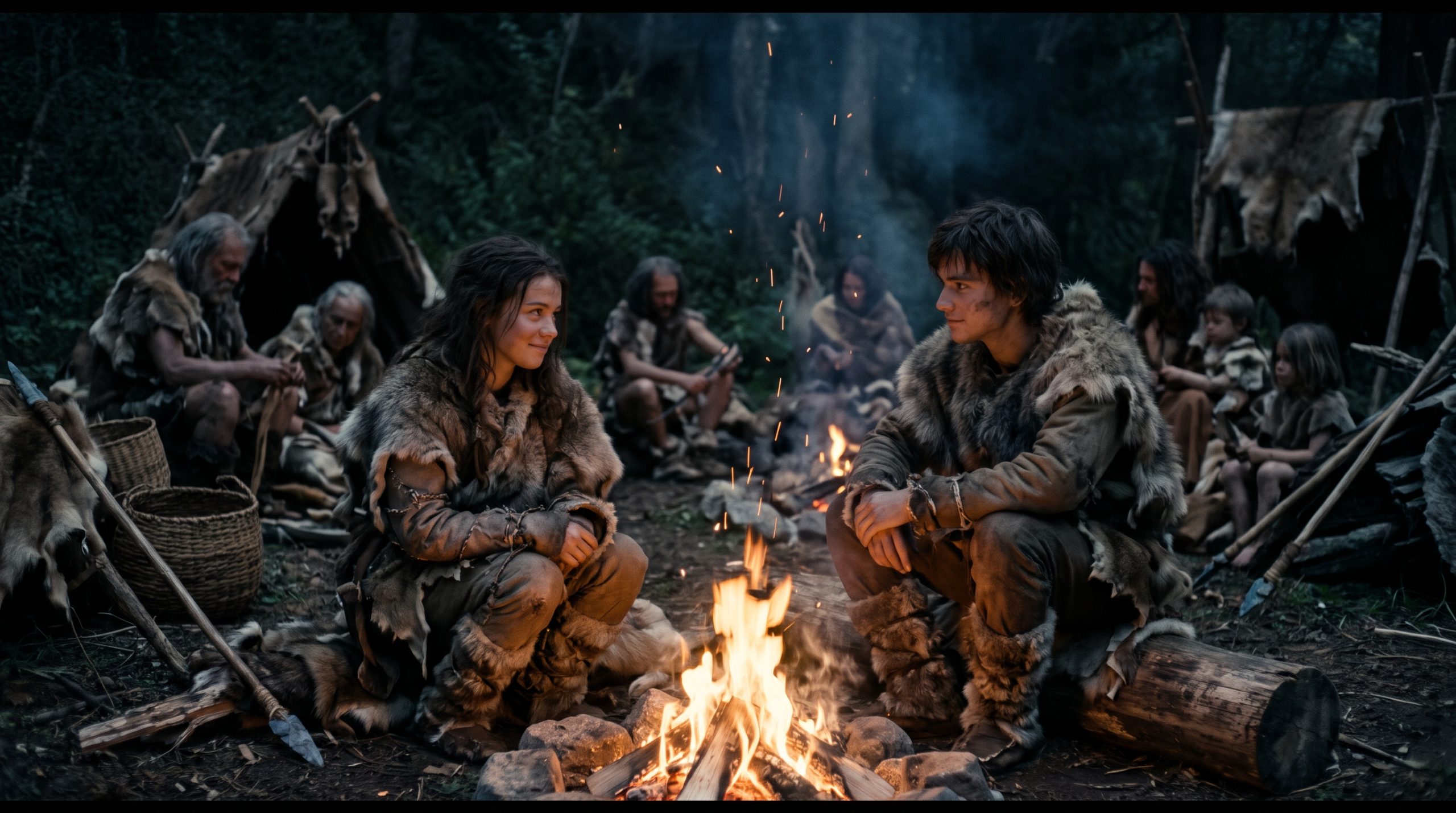
Towven.com – You walk into a room full of strangers, and someone across the space glances at you. You glance back, and then you both look away, fast, as if nothing happened. That pounding heart is a tiny piece of ancient humans flirting, still running inside you today. It was built long before you were born, for a problem far harder than anything a dating app will throw at you.
Your ancestors were not looking for a date. They were looking for a person who could help them keep a child alive in a world that wanted them dead. So how did ancient humans flirt, and how did they find each other at all? Let’s find out why your body is still running their code tonight.
The First Problem Was Not Shyness, It Was Numbers
For most of human history, people lived in small bands of roughly twenty-five to fifty individuals who traveled, hunted, and shared food together. Almost everyone in the group was family. That creates a serious trap. If everyone you know is a relative, who exactly are you supposed to partner with?
Mating inside a tiny family group is dangerous, because children of close relatives are far more likely to inherit harmful genetic problems.
Biologists call this inbreeding, and evolution punished it hard. So our ancestors had to find partners outside their own band, which meant strangers had to meet, trust each other, and like each other enough to build a life together. This is the real starting point of how ancient humans found partners.
Gatherings: The Marketplace of Prehistoric Dating
Many hunter-gatherers, both those studied in the last century and those living today, build wide social networks linked by marriage, trade, and friendship. At certain times of year, bands that spent the dry season far apart would come together near water or a seasonal harvest.
These gatherings were the marketplace of ancient life. People traded tools and stories, shared news about the animals, settled old arguments, and arranged marriages. In the middle of all of it, young people looked at each other across the fire. This was prehistoric dating at its most dramatic.
For a few days, you were surrounded by dozens of new faces. You could not text anyone, look up their reputation, or scroll through their photos. You had only your eyes, your voice, your body, and the little time you were given.
The Eyebrow Flash and the Body Language of Attraction
The answer starts with a small movement you almost certainly made today. When we greet someone we like, our eyebrows rise for about a fifth of a second and then drop. That tiny flash is called the eyebrow flash. Researcher Irenäus Eibl-Eibesfeldt filmed people across several continents and noticed it almost everywhere. It seems to say one thing without words: I see you, and I mean no harm.
That matters because when strangers met in the ancient world, the first question was never whether someone was attractive. It was whether they were dangerous. The body had to send a signal of peace first, through the eyebrow flash, a smile, open hands, or leaning slightly toward someone.
Only after safety came interest, and interest had its own body language of attraction. Scientist Monica Moore catalogued dozens of nonverbal moves by quietly watching women in public places: a glance that lingers and then drops, a slow sweep of the eyes across a room, a tilt of the head, a brief touch of the hair, a soft smile followed by a look away. Almost none of the women knew they were doing it. That is exactly the point.
In a small community where reputation meant survival, a public rejection could cost far more than pride. So the signal had to be gentle, easy to send, and easy to ignore. A glance can be denied, and a smile can be explained away. Ancient humans flirting had a built-in safe mode.
Why Human Babies Changed Everything
Now comes the second problem, and it truly shaped the evolution of attraction. A baby deer can stand within minutes, but a human baby cannot walk, feed itself, or even hold up its own head. Humans evolved very large brains, and a large brain needs years to grow, so children depend on adults for a long time.
A mother could not carry a baby, gather food, and escape a predator alone. Anthropologist Sarah Hrdy argues that humans survived because of cooperative breeding, which simply means babies were raised by many hands: grandmothers, siblings, friends, and very often a committed partner.
So think about what that changes in the psychology of flirting. Our ancestors were not just picking someone attractive. They were choosing a teammate for the hardest project a human can attempt. The signals had to answer a deeper question than “do you like me?” They had to answer “will you stay, will you share, and will you help when things go wrong?”
Costly Signaling: Proof You Cannot Fake
Anyone can say they will stay, so you have to show it, and showing it is expensive. Biologist Amotz Zahavi explained this with the peacock. Its tail is huge, heavy, and bright, and it attracts predators, yet only a very healthy bird can survive carrying it. The tail is honest proof of fitness. This idea is called costly signaling, and costly signals are trusted because they are hard to fake.
Apply that to our ancestors. A young man who brought back meat showed skill, courage, and a willingness to share, and among hunter-gatherers, shared meat built bonds that lasted for years. A young woman who could find rare plants and prepare food showed knowledge that kept people alive.
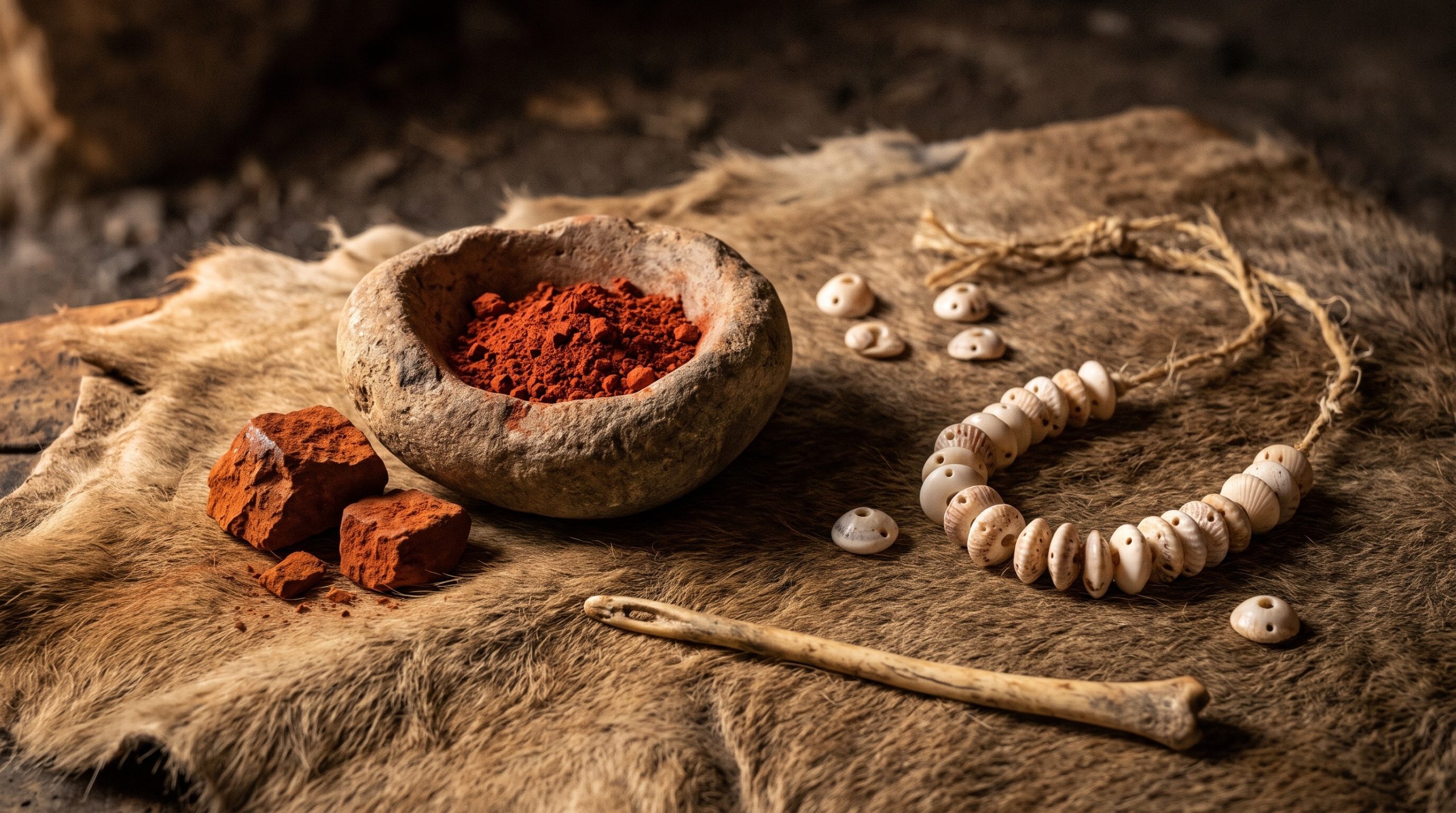
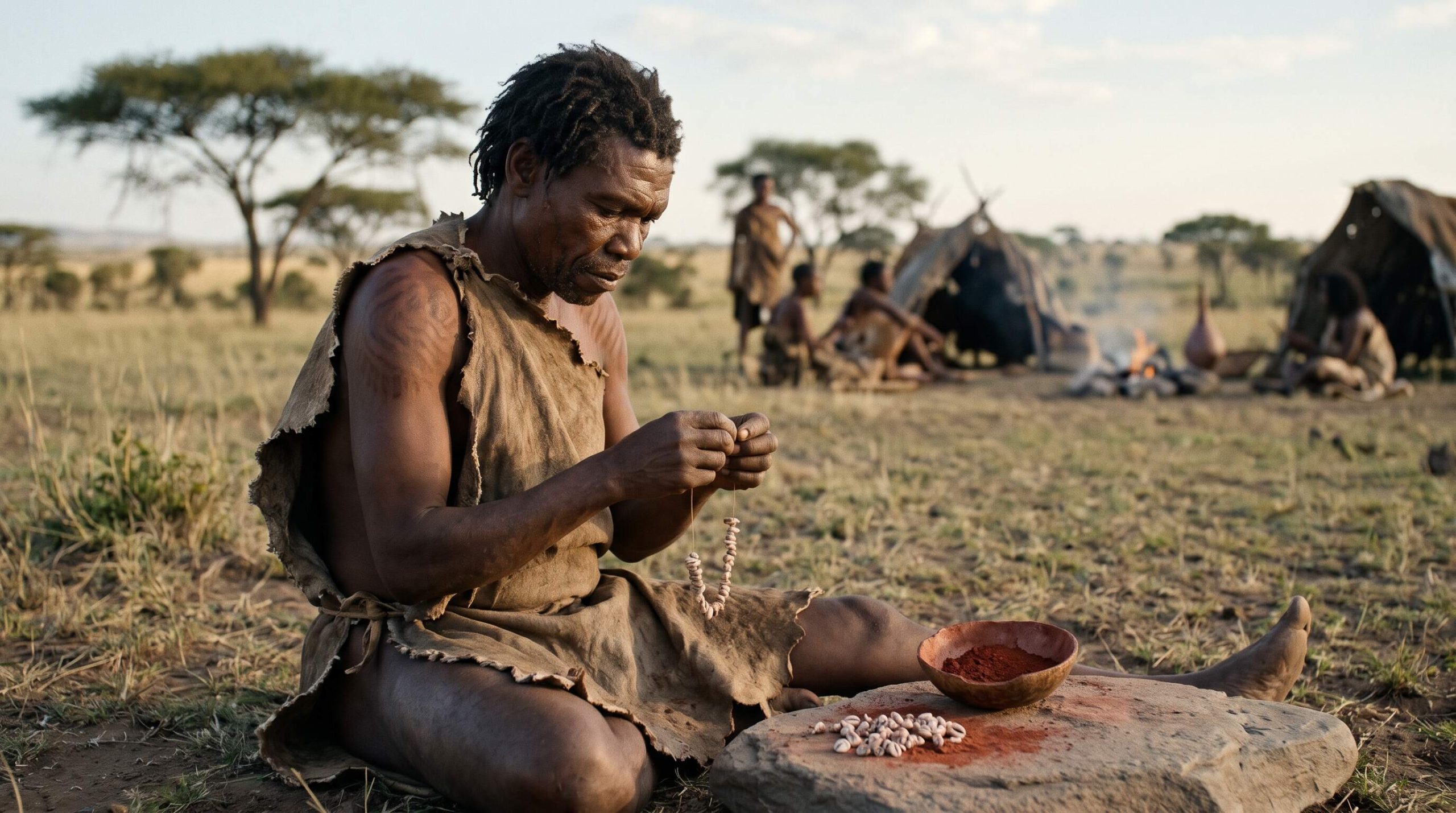
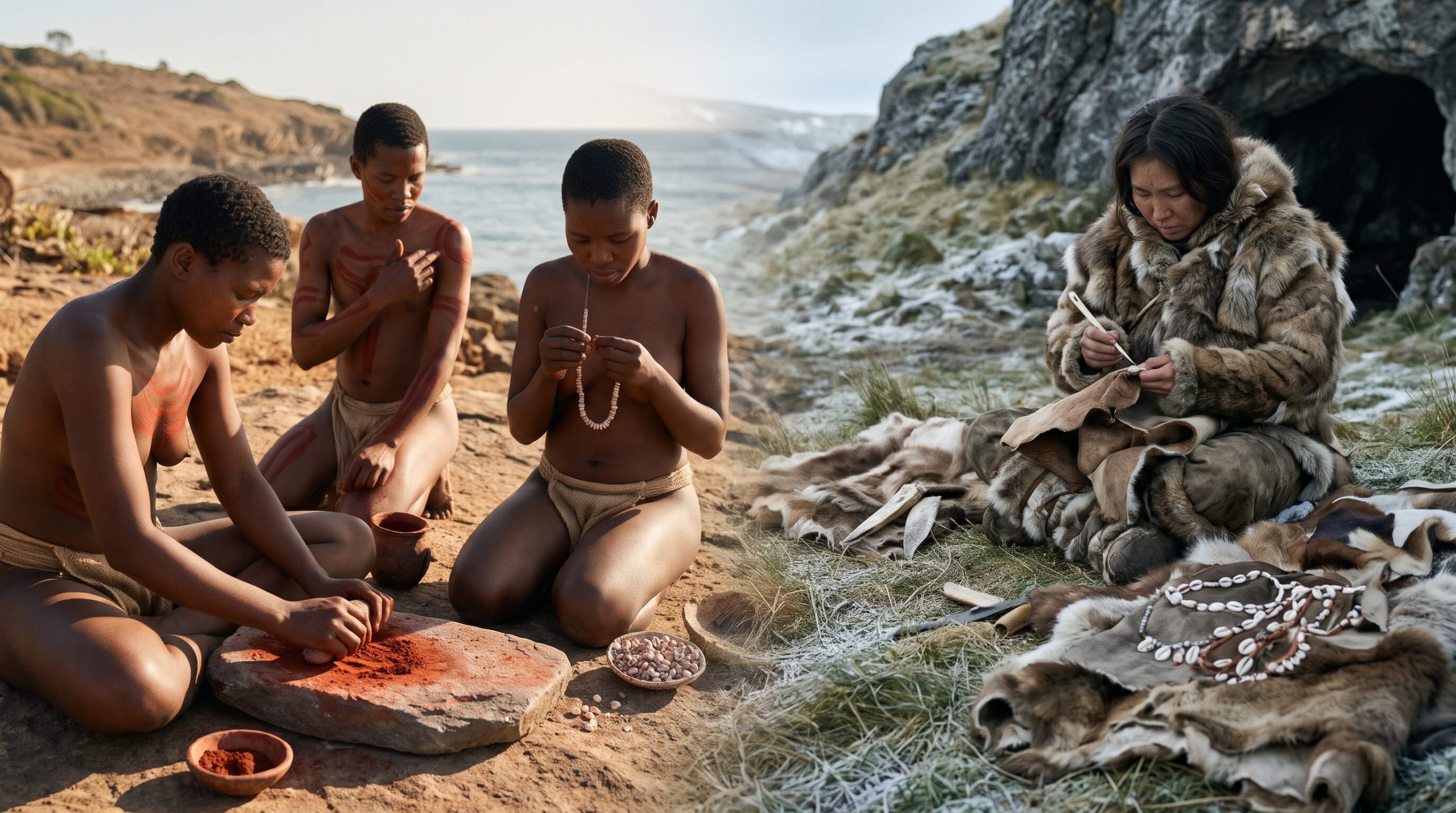
Someone who could shape a sharp stone tool or craft jewelry showed patience, a quality you want in a person raising a child beside you.
Then there is the thing that seems least useful of all: music. Charles Darwin suggested that song may have begun as a way to attract partners, just as it does for birds. Psychologist Geoffrey Miller later argued that music, humor, storytelling, and art may be fitness signals that say, “My mind is sharp, my body is healthy, and I have energy to spare.”
Some of the earliest flutes ever found are around forty thousand years old, carved from bird bone and mammoth ivory. Beauty was never a luxury. It was an advertisement, and it is the same display you use when you make someone laugh or send a song to someone you like.
Layers, Time, and the Whole Village
Put it together and ancient courtship was never one thing. It was layers: a peace signal, then a soft test of interest, then a display like a song or a gift of food. Then came time. Courtship took weeks or months of small encounters, like a shared meal, a task done together, or laughing at the same thing.
Here the story takes a turn most people never expect. For most of history, partners were not chosen by the couple alone. Families watched closely and elders offered opinions, because a marriage was an alliance between two networks of people who would share food and raise children together. Your ancestors were flirting with the whole world around the person.
That made reputation everything. Researcher Robin Dunbar proposed that humans use gossip the way other primates use grooming, talking about who is kind, who is selfish, and who keeps promises. You do this too when you check someone’s friends. It is the same ancient reputation system, only faster.
Neanderthal DNA and Ancient Mating: The Biggest Surprise
Now for the biggest twist. Most people alive today whose ancestry comes from outside Africa carry about one to two percent Neanderthal DNA.
Neanderthals were a different human species who lived in Europe and Asia long before modern humans arrived. That DNA did not appear by accident. It is the lasting evidence of Neanderthal DNA and ancient mating, proof that some of them met and had children together.
Researchers have also found Denisovan DNA, known mostly from fragments in a Siberian cave. In the story of human evolution, flirting sometimes crossed the line between whole species. Curiosity itself was a survival strategy.
Why Humans Flirt Today: The Brain Did Not Change
The world changed almost overnight, but the brain did not. Your ancestors met a few dozen potential partners in a lifetime, while you can see thousands of faces in one evening on a phone.
Yet look at what you actually do, and you see why humans flirt the way they always have. You still search for the safe signal, like a warm smile in a photo. You still perform, mentioning the mountain you climbed or the dog you rescued, which are modern costly signals. You still check reputation, and a first date is just the first meal at a very old campfire.
Even the awkwardness has a purpose. Helen Fisher describes romantic attraction as a powerful brain state driven by chemicals such as dopamine, which focuses your attention on one person. Modern evolutionary psychology of attraction treats that nervous flash as machinery built to push two strangers toward the biggest decision a human can make.
Conclusion: Every Ancestor Who Dared to Look Back
Most people feel embarrassed by how strange love makes them behave. But you are not out of control. You are following a script that is hundreds of thousands of years old, and ancient humans flirting was only the first draft.
Every nervous glance and rehearsed line is part of a long chain stretching back through every one of your ancestors, because every one of them managed to find someone. If even one link had broken, you would not be here.
So the next time your eyes meet someone else’s and you feel that nervous flash, remember what it really is. It is one of the oldest conversations in the human story, whispered again without a single word. It is not just you. It is every ancestor who ever dared to look back.