
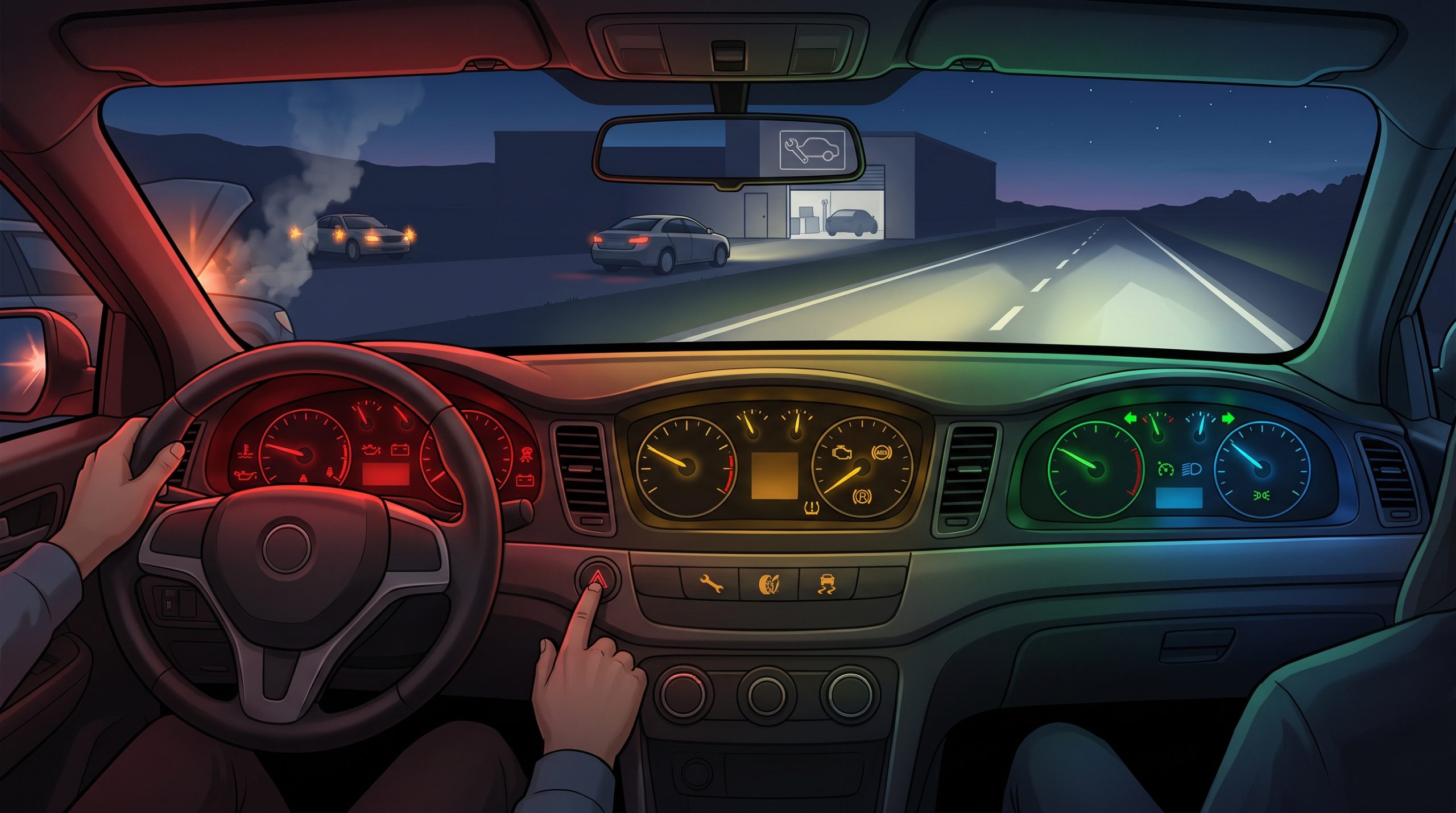
Car dashboard warning lights are your vehicle’s way of telling you something needs attention. Some are simple reminders, while others mean you should stop driving immediately. This guide explains what the colours mean, covers the most common symbols and shows what to do when one lights up.
What the Colours Mean
- Red: a serious problem or a safety issue. Stop safely as soon as you can and check the manual.
- Amber or yellow: a fault or warning that needs attention soon. Book a check-up.
- Green or blue: a system is on, such as headlights or cruise control. No action needed.
Symbols vary between makes and models, so your owner’s manual is the final authority for your car.
Warning Lights That Need Immediate Attention
Oil Pressure Warning
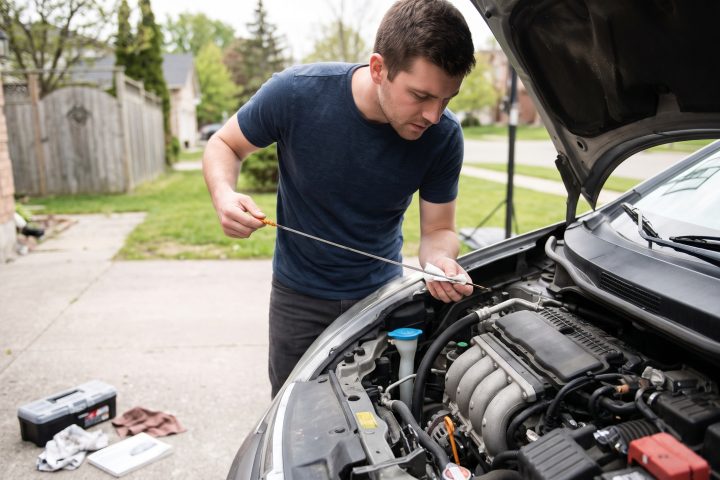
This usually shows an oil can. It can mean low oil level or low oil pressure. Driving on can cause severe engine damage, so stop, switch off the engine and check the oil once it has cooled.
Engine Temperature Warning
A thermometer symbol in red means the engine is overheating. Pull over safely, switch off the engine and let it cool before checking the coolant. Never open a hot radiator cap.
Brake System Warning
A red brake light can mean the handbrake is on, brake fluid is low or there is a fault in the brake system. If the light stays on after releasing the handbrake, have the car checked before driving further.
Battery or Charging Warning
A battery symbol suggests the charging system is not working properly, often because of the alternator or a belt. The car may run for a short time on battery power, so head for a safe place or a garage.
Warning Lights to Check Soon
Check Engine Light
A steady amber engine light means the car’s computer has logged a fault. The cause can be minor, such as a loose fuel cap, or serious. A mechanic can read the fault code with a diagnostic tool. If the light is flashing, reduce speed and have the car looked at as soon as possible, because that often signals a more serious problem.
Tyre Pressure Warning
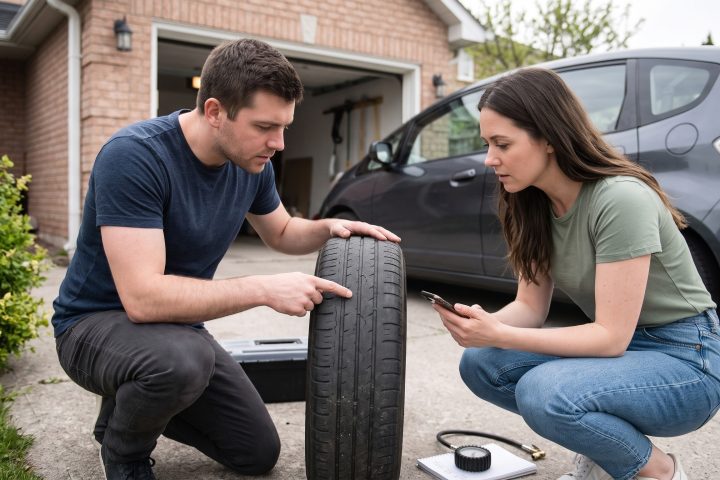
This looks like a flat tyre with an exclamation mark. Check the pressure in all tyres with a gauge and inflate to the level shown in the manual or on the door frame. If it returns, you may have a slow puncture.
ABS Warning
The anti-lock braking system has a fault. Normal brakes should still work, but the ABS safety function may not. Get it checked.
Airbag Warning
The airbag system may not work in a crash. Have it inspected without delay.
What to Do When a Light Comes On
- Note the colour and symbol.
- If it is red, or the car feels or sounds wrong, pull over safely and stop.
- Check your owner’s manual for the exact meaning.
- Check simple things: fuel cap, oil level, tyre pressure.
- If you are unsure, call roadside assistance or a mechanic rather than risking the engine.
How to Avoid Warning Lights
Regular servicing, correct tyre pressure and fluid checks prevent many warnings. Our guide to 12 cheap car maintenance habits that prevent expensive repairs covers the basics. If you are shopping for a car, make sure no lights remain on during the test drive, as explained in our used car buying checklist.
Frequently Asked Questions
Can I drive with the check engine light on?
If it is steady and the car drives normally, you can usually continue carefully to a garage. If it flashes or the car runs badly, stop driving and get help.
Why did a warning light turn off by itself?
Some faults are temporary. The fault may still be stored in the computer, so it is still worth having it checked.
Final Thoughts
Do not ignore a warning light, but do not panic either. Learn the colours, check the manual and act quickly on red lights. Early attention is almost always cheaper than a major repair.
This article is for general information only. Symbols and procedures vary by vehicle, so always follow your owner’s manual and consult a qualified mechanic.

Comments are for Silver members and up
Join the community to share your thoughts. Members keep the discussion friendly and spam-free.