
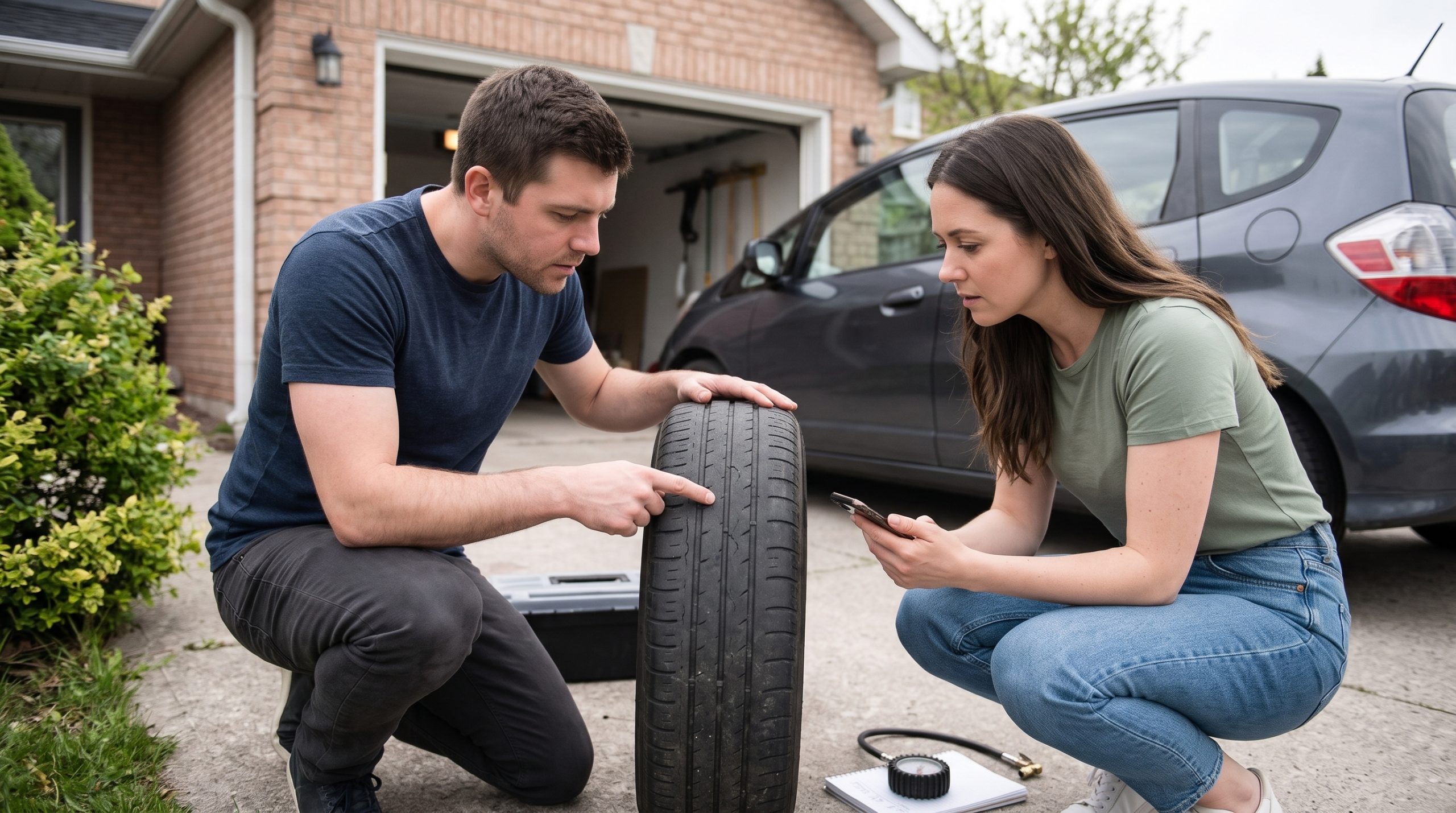
Knowing when to replace car tyres is one of the most important safety checks you can do. Tyres are the only part of your car that touches the road, and worn ones increase stopping distances and the risk of skidding, especially in the wet. Here are seven signs it is time for new tyres, plus simple checks you can do at home.
1. Low Tread Depth
Tread channels water away from the tyre. As it wears, grip falls, particularly in rain. Legal minimum tread depth differs by country, so check your local rules. Many experts advise replacing tyres before they reach the legal limit.
Most tyres have small tread wear indicator bars in the grooves. When the tread is level with these bars, the tyre is worn out.
2. Cracks in the Sidewall
Look at the sides of each tyre. Fine cracks, cuts or splits can be a sign of ageing or damage and can lead to failure. Have them inspected by a professional.
3. Bulges or Blisters
A bulge on the tyre means the internal structure is damaged. This is dangerous and the tyre should be replaced straight away.
4. Uneven Wear
If one edge of the tyre is more worn than the other, or the centre is more worn than the sides, you may have an alignment, suspension or pressure problem. Fix the cause as well as replacing the tyre, or the new one will wear in the same way.
5. Vibration While Driving
Steering wheel or seat vibration can come from unbalanced wheels, damaged tyres or suspension faults. A tyre shop can usually diagnose it quickly.
6. Frequent Loss of Pressure
If you keep topping up the same tyre, it may have a slow puncture, a damaged valve or a bad seal. Have it inspected and repaired, or replaced if it cannot be repaired safely.
7. Age of the Tyre
Rubber hardens over time, even when tyres are barely used. You can find the manufacture date in a four-digit code on the sidewall, showing the week and year. Many manufacturers recommend having older tyres inspected regularly, so check your tyre maker’s and vehicle’s guidance.
Simple Home Checks
- Tread: look for wear indicators or use a tread depth gauge.
- Pressure: check monthly when the tyres are cold, using the figure in your manual or on the door frame.
- Visual check: look for nails, cuts, bulges and cracks.
- Spare tyre: check its pressure and condition too.
How to Make Tyres Last Longer
- Keep pressure at the recommended level.
- Rotate tyres as your manufacturer advises.
- Have wheel alignment checked after hitting a large pothole or kerb.
- Avoid harsh braking and fast cornering.
- Do not overload the car.
Tyre care is one of the best low-cost habits in our list of 12 cheap car maintenance habits that prevent expensive repairs. If a tyre warning light appears on your dash, see our guide to car dashboard warning lights.
Buying Used? Check the Tyres
Worn or mismatched tyres on a used car are a sign of neglect and a cost to factor into your price. See our used car buying checklist for what else to inspect.
Frequently Asked Questions
How long do tyres last?
It depends on the tyre, your driving style, the roads and how well you maintain them. Check tread and condition regularly rather than relying on a set number of miles or years.
Should I replace all four tyres at once?
Not always, but new tyres should generally go on the axle with the best grip. Ask a tyre specialist what suits your car, especially if it has four-wheel drive.
Final Thoughts
Check your tyres monthly, act on warning signs and never delay replacing damaged ones. Good tyres are one of the cheapest safety upgrades you can make.
This article is for general information only. Legal tread limits and tyre guidance differ by country, so follow local regulations and professional advice.


Comments are for Silver members and up
Join the community to share your thoughts. Members keep the discussion friendly and spam-free.