
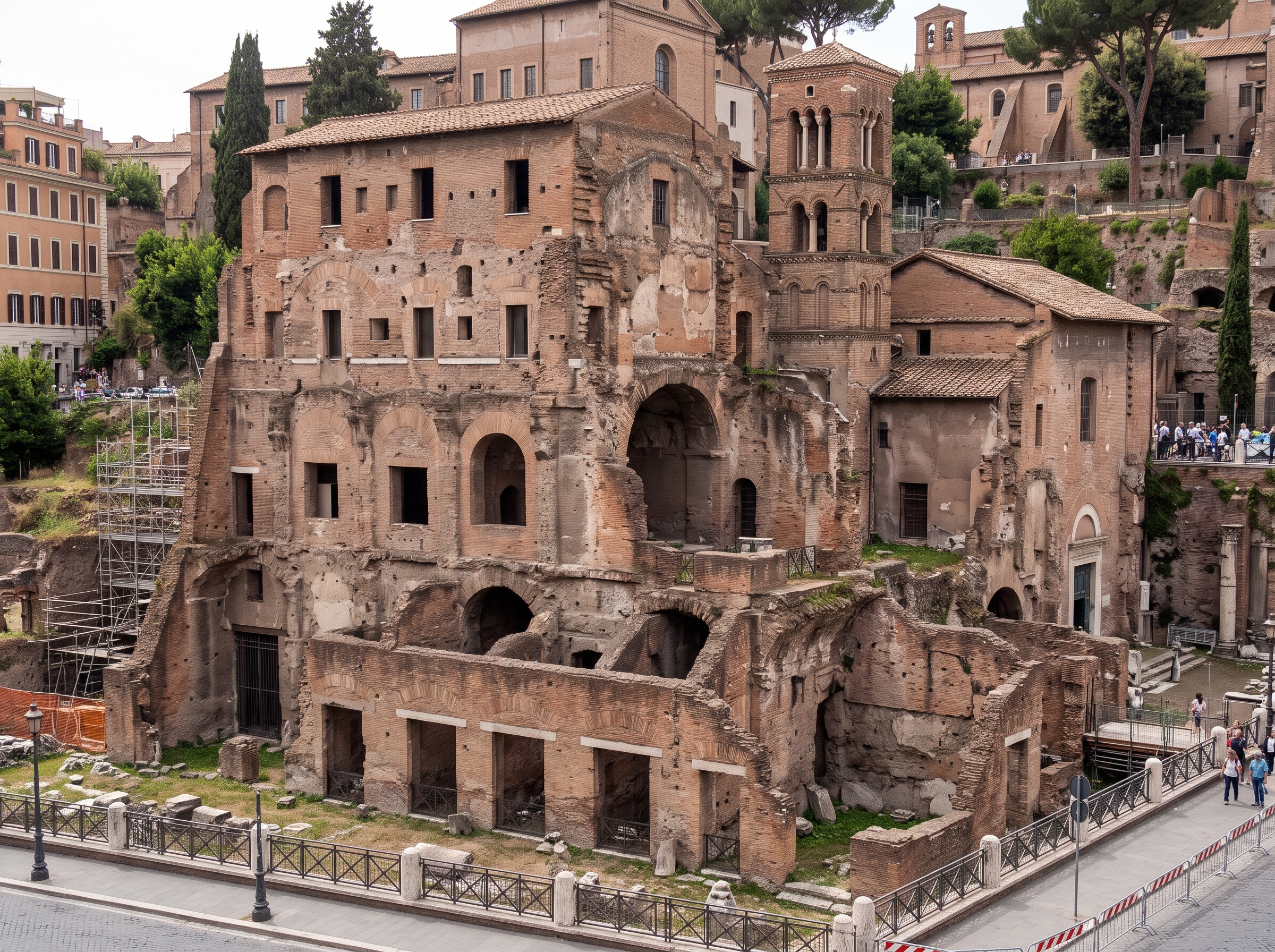
Imagine waking up in a cramped room six flights above a noisy street, with no kitchen, no private toilet, and a landlord who expects his money on time.
That was apartment life in Ancient Rome insulae for most of the city’s people, and it was far less glamorous than the marble villas we see in films. Emperors and senators lived in grand houses, but the crowds that filled the streets lived stacked on top of one another in towering Roman apartment blocks.
The truth about these buildings is stranger, funnier, and more modern than any textbook cliché. There were rent worries, shady landlords, sudden fires, shared latrines, and a strict social ladder measured in staircases. Before you decide whether you would have survived, climb the stairs with us and discover which floor would have been yours.
What Was an Insula, and Why Did Romans Call It an Island?
The Latin word insula means island, and it is the name Romans gave to a block of flats that stood apart from its neighbors, surrounded by streets on every side. At first the word described a whole city block. Over time it came to mean the multi-storey building that rose from it, divided into many separate homes.
The scale was staggering. Augustan Rome may have held as many as one million people, and the great majority did not own a house. One surviving catalogue of the city from the fourth century counts more than 40,000 of these buildings, while another source reports 46,602 insulae compared with only 1,797 private mansions called domus.
The numbers tell a simple story: the elite lived in a few houses, and everyone else lived in the Roman apartment blocks that filled the skyline.
Most blocks were built of brick-faced concrete or lighter timber and rubble, and many had shops along the ground floor. Above the shops, narrow stairs wound upward to rented rooms. Some towers reportedly climbed as high as eight or even ten stories, which explains why emperors repeatedly tried to cap building height.
Why the Ground Floor Was Prime Real Estate
Here is the twist that surprises modern readers. Today, penthouses cost the most. In Rome, the ranking was upside down. The lower your apartment, the more you paid, and the higher you climbed, the cheaper and riskier life became.
The ground floor offered easy access to the street, the shops, and the public fountains where residents collected water. Wealthier tenants sometimes enjoyed larger rooms, painted walls, and even mosaics on the lower levels. A few of the best flats were fitted with comforts such as plumbing and heated floors, though those luxuries belonged mostly to rich homes rather than the average tenement.
Climbing higher meant carrying every bucket of water up many flights of stairs, and carrying every chamber pot down again. It also meant sitting directly beneath the roof, where summer heat was fierce. If a fire started below, the people on the top floors had the longest road to safety. So the answer to the question in our title is simple: the richer you were, the closer you lived to the ground.
How High Was Roman rent, Really?
Money worries are not new. According to ancient sources, Roman rent could range from a few sesterces a month for the smallest rooms to around 50 sesterces for much nicer apartments. For many families, somewhere between 40 and 60 percent of monthly income disappeared into housing.
Because rent was so heavy, many people shared. Families packed several relatives into a couple of rooms, and some tenants sublet corners of their space to others. Poor Roman tenants often owned almost nothing beyond a bed, a few cooking pots, and a small lamp. Their real homes were the streets, the baths, the markets, and the forums, where they spent most of the day.
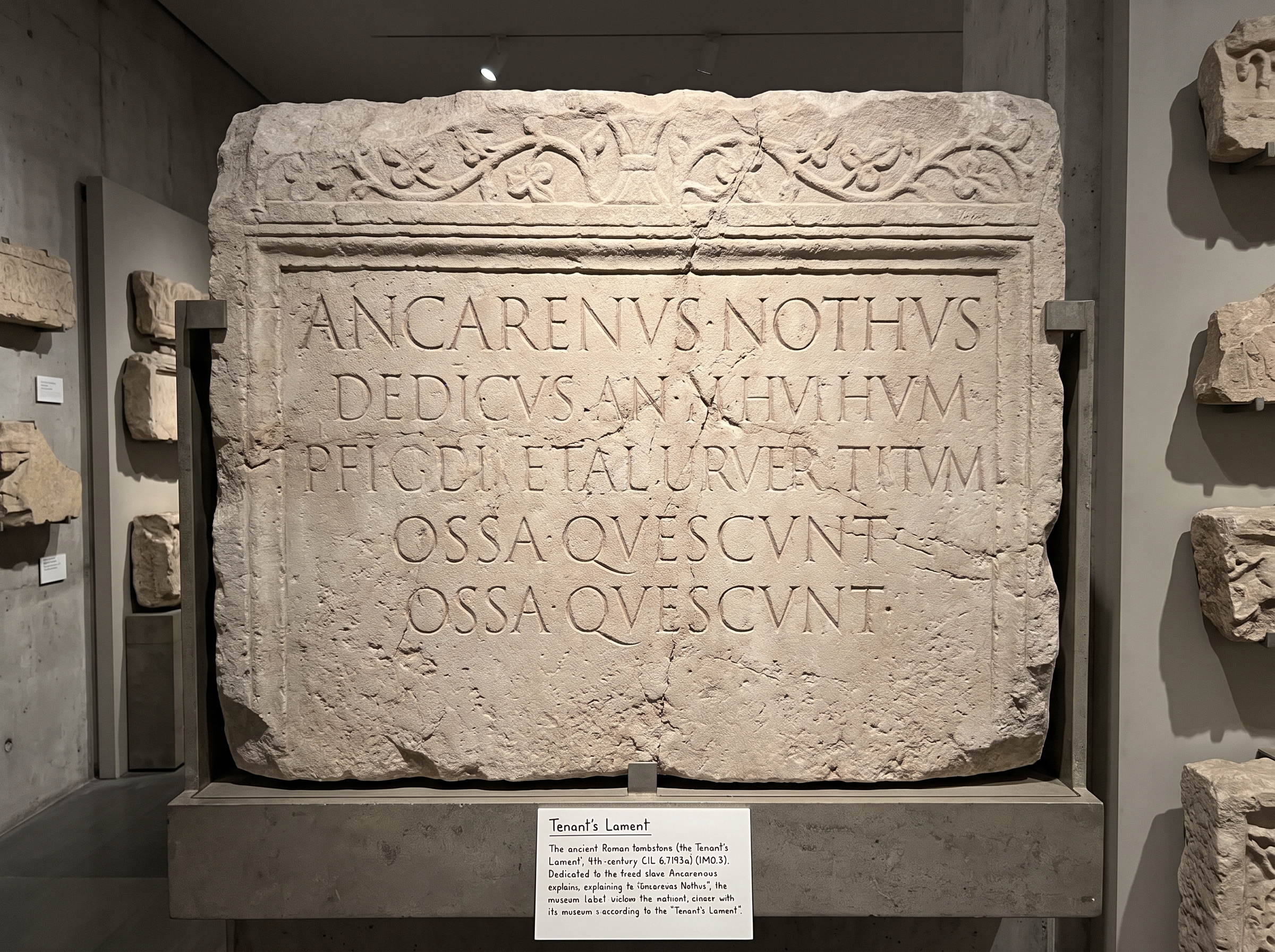
The most famous glimpse of this pressure comes from a tombstone known as the Tenant’s Lament, set up for a freed slave named Ancarenus Nothus. Its message reminds us that for many people in the capital, relief from rent came only after death. Behind the stone humor sits a very real worry that millions of modern renters would instantly recognize.
A Day Inside a Roman Apartment
Picture a typical morning. The building wakes before sunrise as carts rattle past and street vendors shout. Light comes through small windows that face the street or an inner space, and the rooms nearest the windows are the brightest and the most prized.
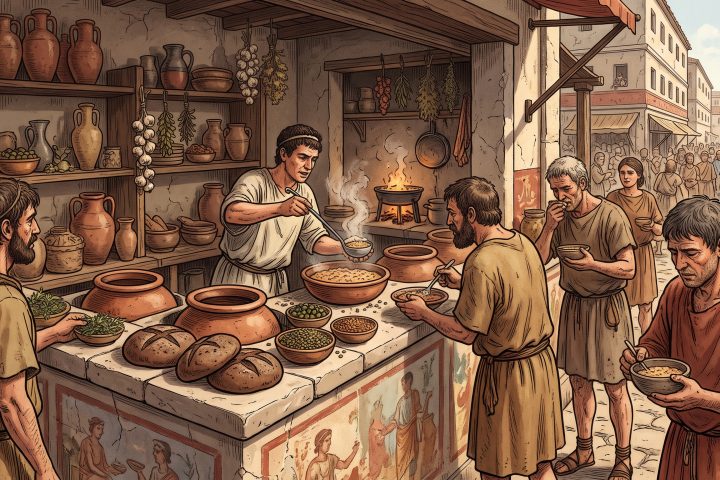
A typical flat might hold only a few rooms. Some had a living space, a bedroom, and a small utility corner, all reached from a shared corridor. Cooking often happened on small portable braziers, which warmed food but also raised the danger of flames. Many people avoided the risk by buying hot meals from nearby snack counters instead of preparing them at home.
Water and waste were the daily challenge. Residents hauled water from public fountains, and many used pots that were emptied later. Public latrines offered a shared alternative, but they were famously public: long rows of seats, up to twenty in some places, with no partitions for privacy, and sometimes a small fee at the door.
Noise never stopped. Carts, hammers, shouting merchants, and neighbors arguing through thin walls made sleep difficult. The satirist Juvenal grumbled about this very chaos, painting a picture of a city where rest was a luxury only the wealthy could buy.
Fire, Collapse, and the Dangers of Living Up High
If rent was the quiet worry, fire was the loud one. Cheap materials, tight spacing, open flames, and wooden beams created a perfect recipe for disaster. A single spark could race from one building to the next faster than any watchman could respond, and Rome had only a basic fire service. One account of the great fire under Nero says that more than a third of the city was destroyed.
Juvenal’s third satire gives us a vivid, if exaggerated, scene. A frightened tenant is trapped in a shaky house while flames climb toward the upper rooms, and the people living highest are the last to notice. Scholars remind us that this is satire, not a news report, but it captures the real fear that shadowed every tenant.
Collapse was just as scary. Some landlords prioritized profit over durability, cutting costs on materials and repairs. A crack in the wall might be patched with paint rather than fixed properly, and owners cheerfully told tenants not to worry. Emperors responded with height limits, repeatedly trying to stop towers from rising beyond what the walls could safely carry.
One famous businessman even turned disaster into profit. The wealthy Marcus Crassus is said, by the writer Plutarch, to have bought burning buildings and their neighbors at bargain prices, then rebuilt them with his own workers.
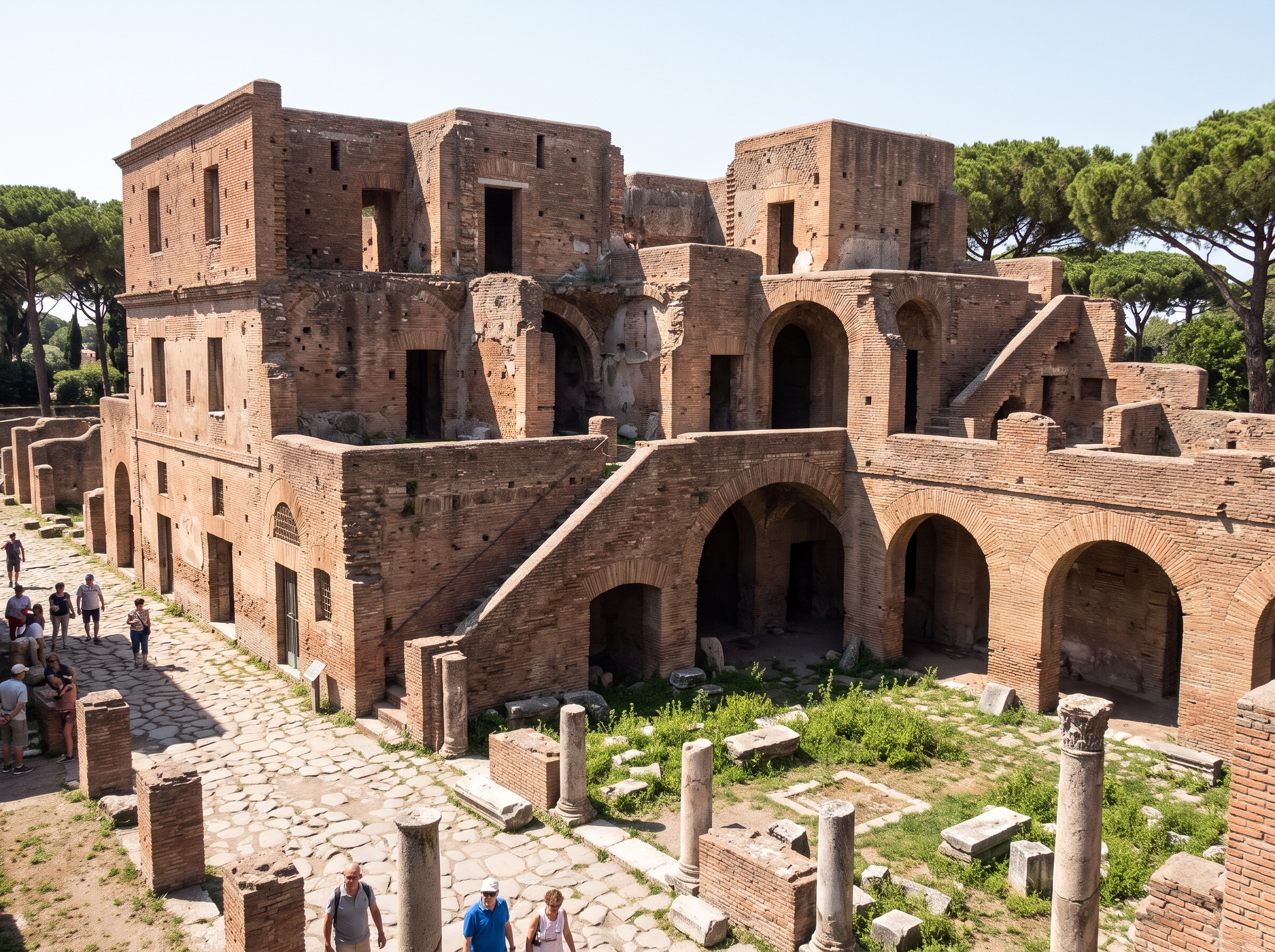
The Brilliant Side: Ostia Antica and the Well-Built Insulae
Not every insula was a death trap. The port city of Ostia, just down the river from Rome, preserves some of the best examples we have today, and a visit to Ostia Antica can change how you picture ancient apartment living.
At Ostia Antica, researchers can study brick walls, staircases, shop fronts, and shared courtyards that were obviously designed with care. Many of these buildings even carried proud names, such as Insula Bolani, Insula Vitaliana, and Insula Sertoriana. The names worked like a modern building brand, signaling prestige and attracting respectable tenants.
These well-made blocks show that apartment life in Ancient Rome insulae was not a single story of misery. Some tenants were skilled workers, small traders, and craftspeople who earned a decent living and enjoyed a reasonable home near the shops, the baths, and the harbor.
Another discovery shows how deep the story runs. Under a medieval church in Rome called Ara Coeli, archaeologists uncovered the remains of a real insula that extended far below ground level. It helps scholars fill in the missing pieces of everyday life in the capital, where so few buildings survive.
Myths That Need to Die
The first myth says every single Roman lived in a slum. In truth, rented housing covered a huge range of comfort. A rented apartment could still hold reception rooms, painted walls, and mosaics, and the difference between owning and renting did not match the difference between rich and poor.
The second myth says Romans were helpless victims of greedy landlords. Landlords certainly cut corners, yet tenants negotiated, moved, shared, and found ways to survive. City life also brought opportunities that country life could not offer: work, entertainment, free grain at times, and a lively social world.
The third myth says nothing from these buildings matters today. In reality, the story of the Roman apartment blocks helps explain how mass housing began, why building codes exist, and why cities still argue over rent, safety, and density. The same questions that troubled emperors trouble mayors now.
Conclusion: Would You Have Survived Apartment Life in Ancient Rome Insulae?
So, which floor would have been yours? If you were rich, the lower levels would have welcomed you with larger rooms, better light, and a faster way out. If you were poor, you would have climbed to the cheaper, hotter, and riskier heights, carrying your water and your worries with you. Either way, you would have lived in the beating heart of the greatest city of the ancient world.
The tale of apartment life in Ancient Rome insulae is not just a story about the past. It is a mirror held up to our own crowded cities, with their rising rents, fragile buildings, and tiny homes packed with big dreams. The Romans solved some of those problems with brilliant engineering and failed at others with brutal results.
Next time you step into an elevator in a busy modern city, remember the tenants who climbed those ancient stairs before you. They were ordinary people with ordinary human hopes, and their crowded buildings shaped the cities we still live in today. What would your Roman address have been?

Comments are for Silver members and up
Join the community to share your thoughts. Members keep the discussion friendly and spam-free.