
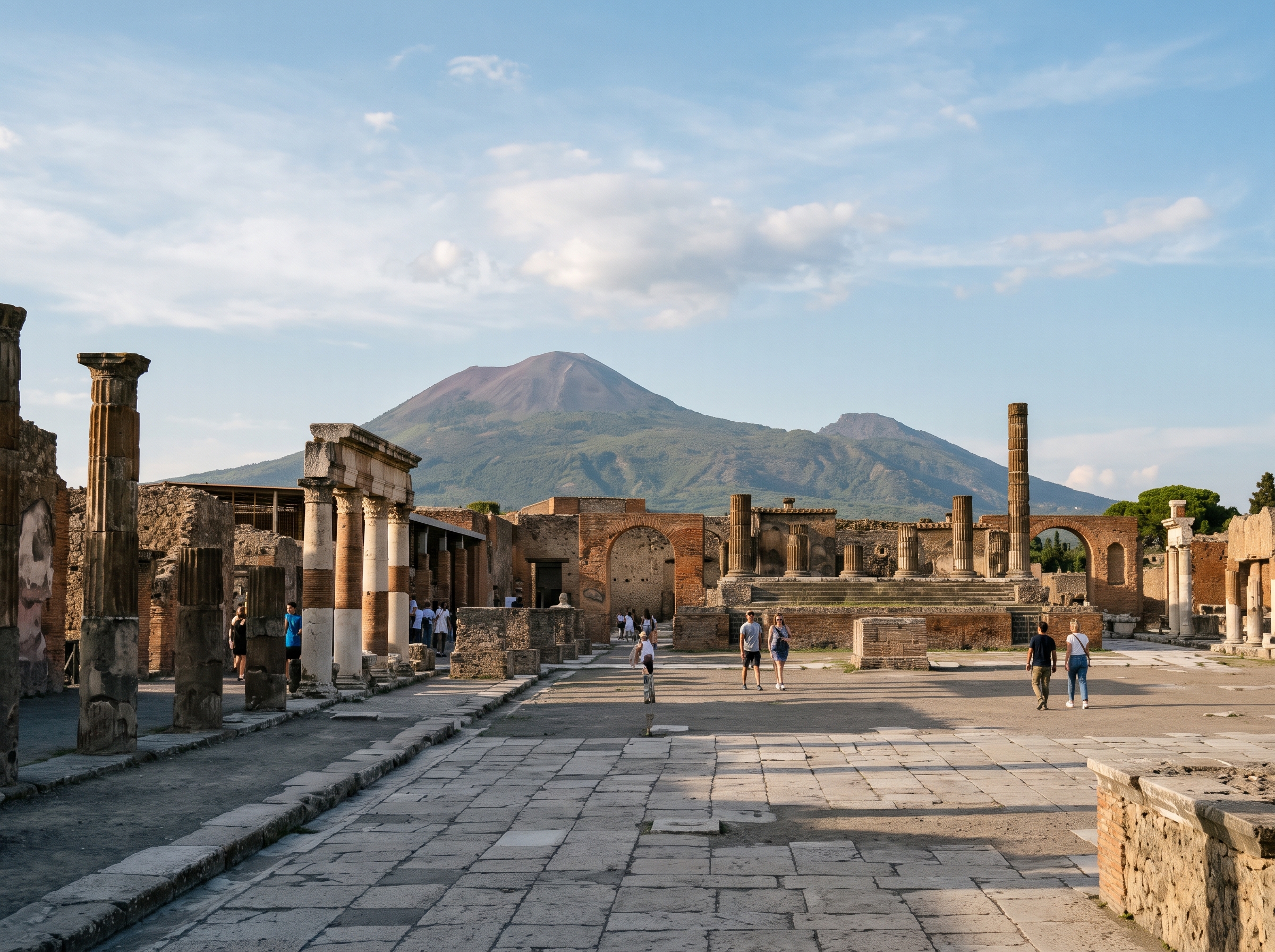
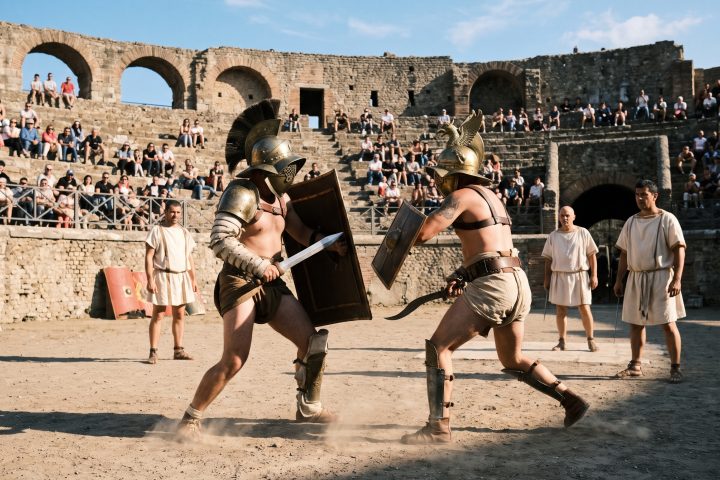
In the year 79 AD, Pompeii was a lively Roman town of roughly eleven thousand people on the Bay of Naples. Bakers fired their ovens, shopkeepers hung out their signs, and gladiators trained for the next games.
Above it all rose Mount Vesuvius, green with vineyards. Few residents realized it was a volcano, because it had been quiet for centuries.
Then, around midday, Vesuvius exploded. A towering column of ash and pumice shot some thirty kilometers into the sky, and stones began raining down on the town. For hours people fled, sheltered, or hesitated. Roofs collapsed under the weight of the pumice, which piled up several meters deep.
Across the bay, a young man named Pliny the Younger watched the eruption and later described it in letters to the historian Tacitus. His uncle, Pliny the Elder, the famous naturalist and commander of the Roman fleet, sailed toward the disaster to rescue people and died on the shore.
The deadliest phase came the next morning. Fast-moving clouds of superheated gas and ash, called pyroclastic surges, rushed down the mountain and swept through the town, killing everyone who had stayed behind. When it was over, Pompeii lay under as much as six meters of volcanic material, and the nearby town of Herculaneum was buried too.
Pompeii then vanished from memory for nearly 1,700 years. Systematic excavation began in the 1700s, and what emerged astonished the world. Because the ash sealed the city so quickly, everyday life was preserved in extraordinary detail.
Archaeologists found loaves of bread still in the oven, fast-food counters called thermopolia, and walls covered in graffiti. Some of it is political, such as election slogans backing local candidates. Some of it is simply human, like insults, love notes, and jokes. A mosaic at one doorway warns visitors cave canem, “beware of the dog.”
The most haunting discovery came in the 1860s. Giuseppe Fiorelli noticed that the hardened ash contained hollow spaces where bodies had decomposed. He poured plaster into them, creating casts of victims in their final moments: a person curled up, a mother shielding a child, a dog straining against its chain.
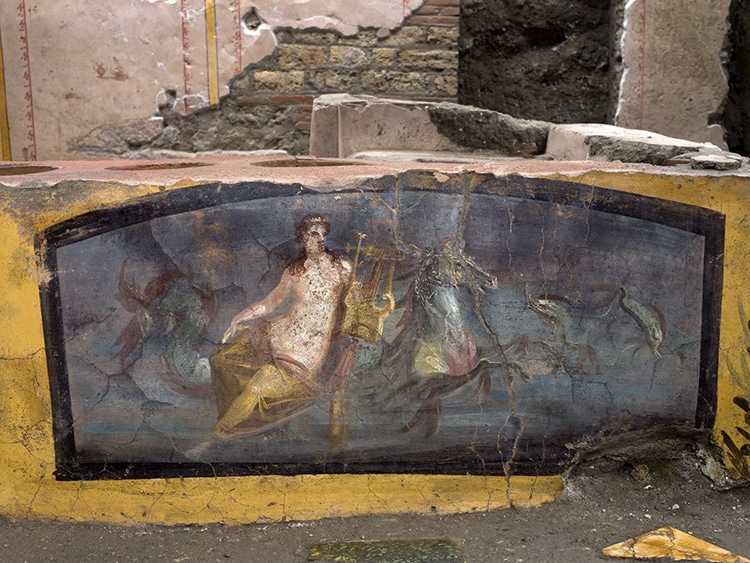
Pompeii is still revealing secrets. In 2020, archaeologists uncovered a thermopolium decorated with paintings of the animals sold there, along with traces of food in its jars.
Even the date of the eruption is debated. Tradition says August 24, but a charcoal inscription found in 2018 suggests it may have happened in October.
Pompeii endures because it feels so close to us. It was not a palace or a temple preserved for posterity, but an ordinary town caught in the middle of an ordinary day.
Walking its streets, you realize the Romans were not distant marble statues. They were people who ate, argued, flirted, and worked, much like us.
Comments are for Silver members and up
Join the community to share your thoughts. Members keep the discussion friendly and spam-free.