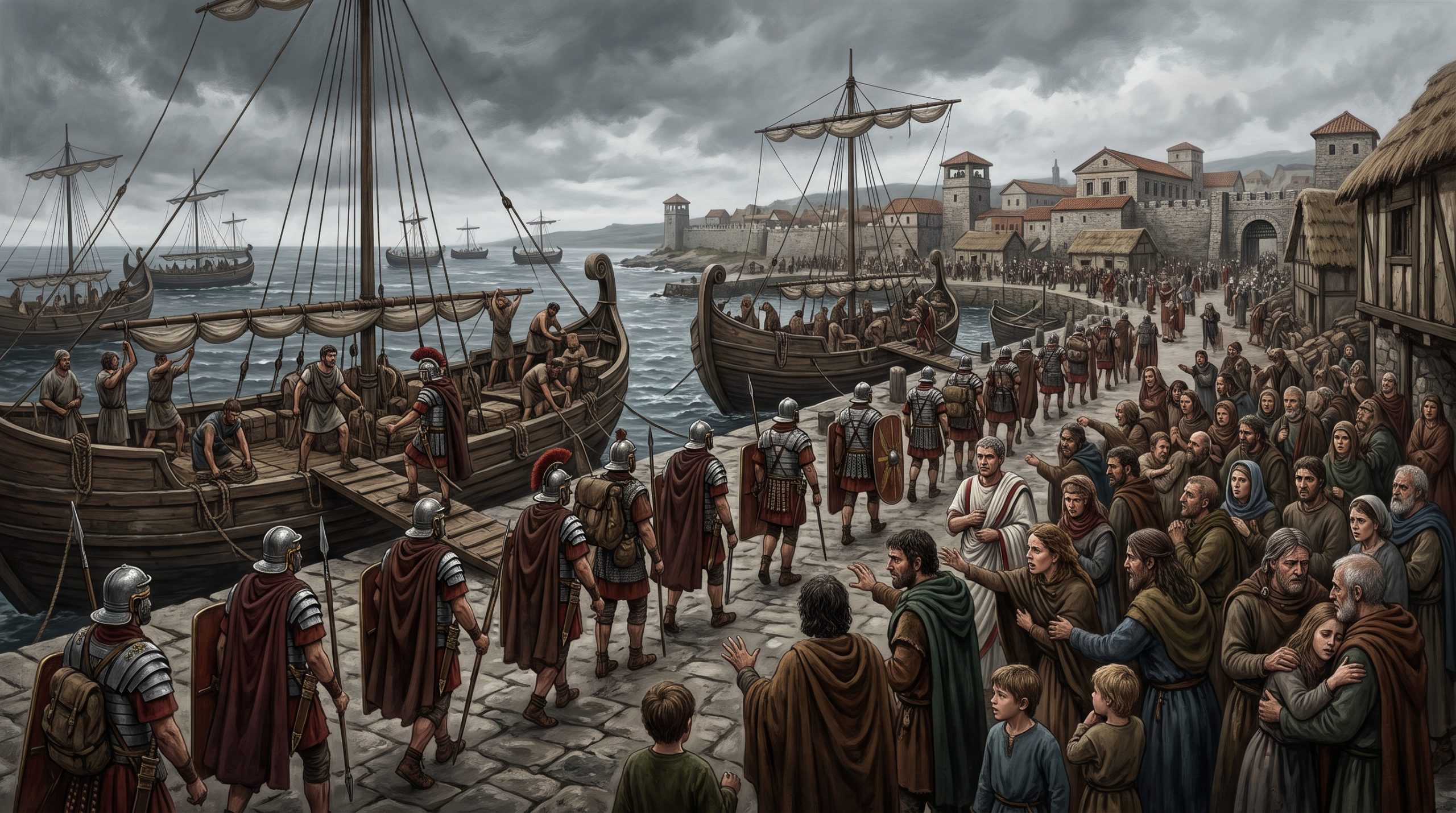
Imagine waking up in the year 420 in a town that had been Roman for longer than anyone could remember. Welcome to life in Roman Britain after legions left, a story stranger, slower, and more unsettling than the myth of one dramatic departure.
You still speak the language, still carry coins stamped with an emperor’s face, and still expect the magistrate, the tax collector, and the army to exist. Then, slowly, they do not.
In this article we follow the end of Roman rule through the eyes of ordinary people, and we ask why one of the wealthiest provinces in northwestern Europe unraveled faster than almost any other, and what that reveals today.
The Year 410 Myth: Why the Romans Never Simply Left
Most of us learned a tidy version of events. In 410, the story goes, the legions packed their bags, sailed away, and left Britain to its fate. The truth is messier. The soldiers who departed over several decades to fight rivals on the continent were only a fraction of the people living on the island.
Those left behind, often estimated at three to four million, had belonged to the Roman world for roughly 350 years and would have felt every bit as Roman as the troops boarding the ships.
The famous date also comes from a letter. Emperor Honorius, pressed by crises in Italy, reportedly told the cities of Britain to look to their own defence. It was less a farewell than an admission that Rome could no longer help. Historians still argue over what the message meant, but nearly all agree that the end of Roman rule was a process, not a single morning.
What Held Everyday Roman Britain Together
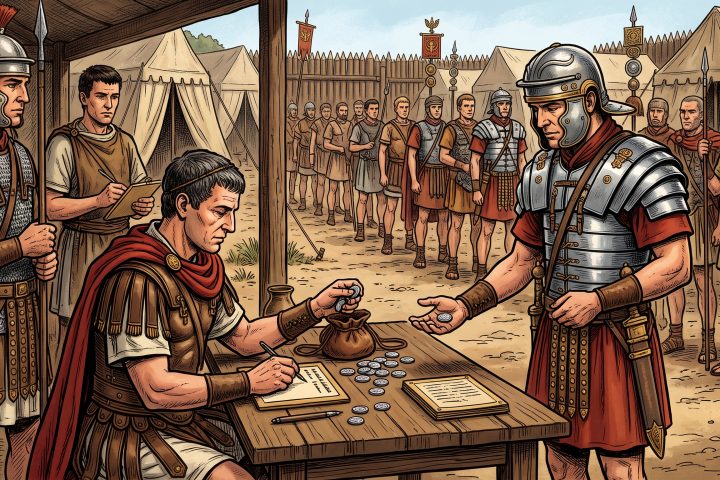
To understand the fall, you must understand the machine. Roman Britain ran on a loop of money, soldiers, and officials. Taxes paid the army, the army paid for goods in local markets, and the coins it spent returned to the state as taxes.
Towns such as Londinium, Verulamium, Corinium, Lindum, and Eboracum grew up to serve this system, selling bread, pottery, wine, and services to garrisons and administrators.
Everything else depended on that loop. Tile makers, potters, and traders worked within a network of roads, ports, and reliable coinage. Break the loop and the whole structure begins to wobble. That is why life in Roman Britain after legions left changed in ways that went far beyond politics, reaching into kitchens, workshops, and farms.
The Day the Money Stopped
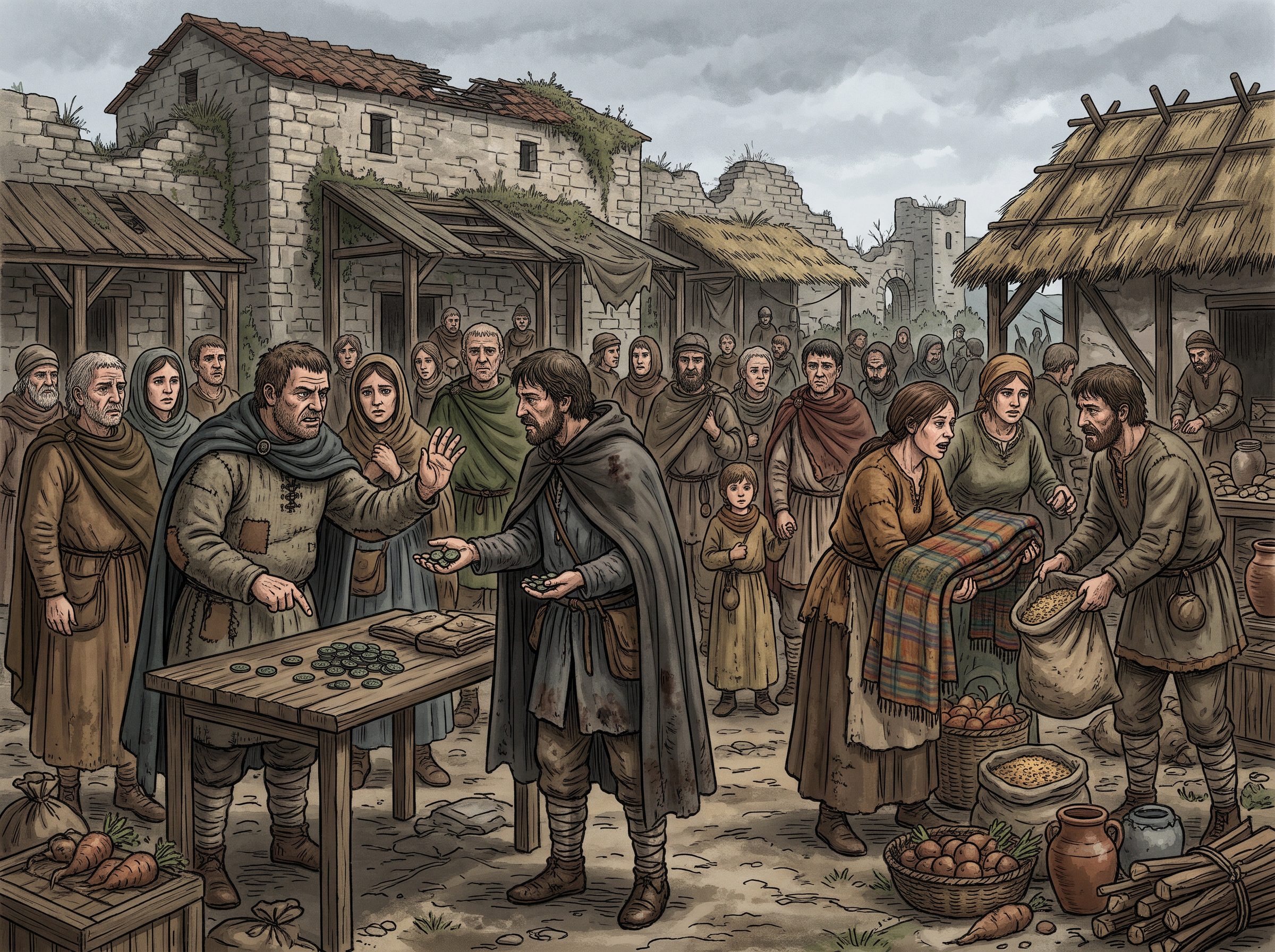
Few facts are as striking as what happened to the coins. The supply of bronze coinage to Britain slowed after 395 and stopped altogether after 402, as it did across the western empire. After about 410, no new coin enters the archaeological record. People kept using the old Roman coins for a while, and hoards buried afterward still contain late Roman bronze pieces their owners clearly valued.
But a currency that cannot be replaced slowly dies. Prices lose meaning, wages become awkward, and trade shifts toward barter and local obligation. A potter in a market town could no longer count on soldiers with fresh pay in their purses.
Without a steady flow of money, the specialised crafts that made Roman towns lively began to disappear, and with them went the habit of buying rather than making.
Towns Without Customers: The Quiet Death of the Cities
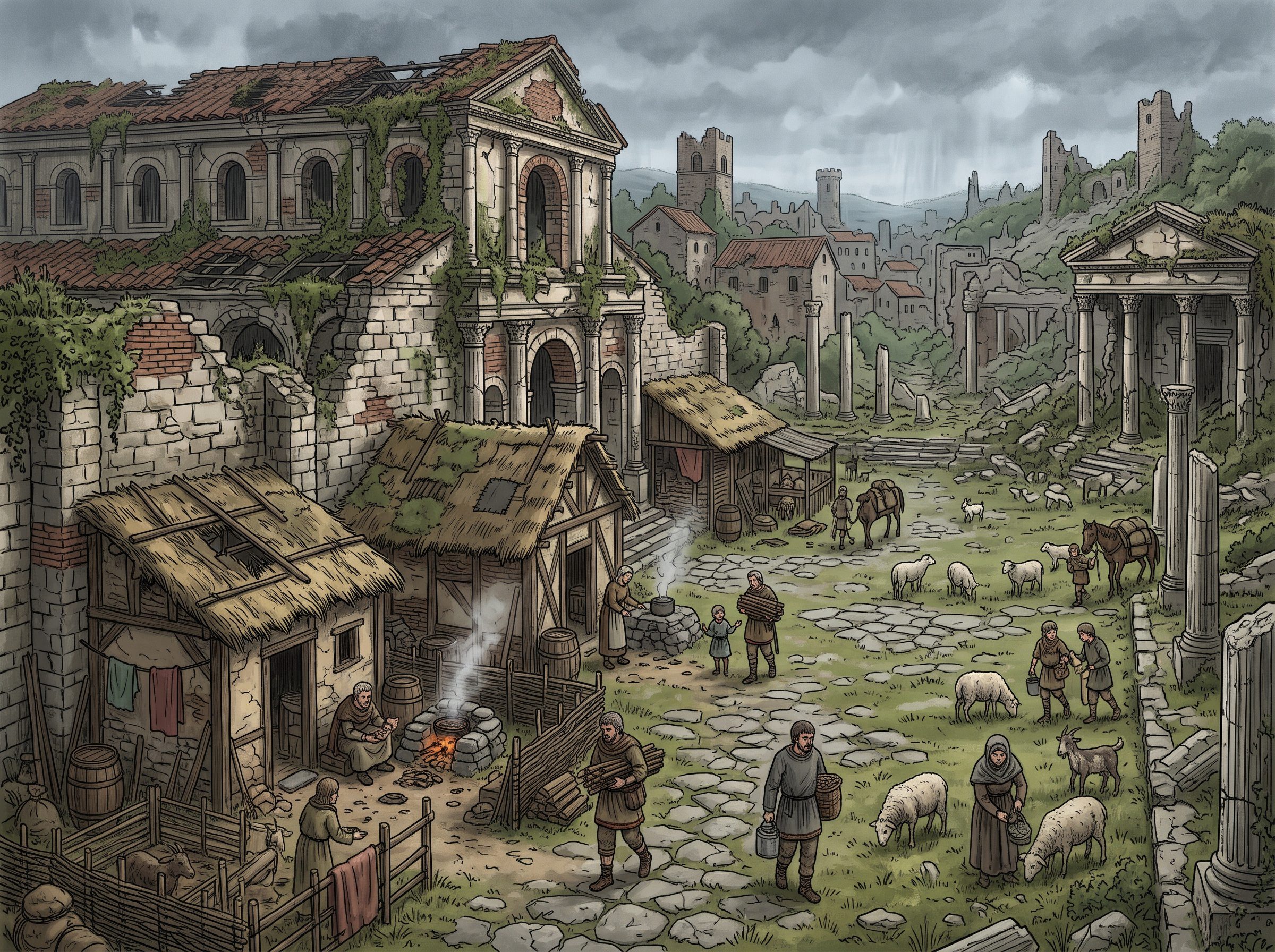
Perhaps the most dramatic change was urban decay. Within a couple of generations, towns that had boasted forums, bathhouses, and paved streets lost most of what made them urban. With no standing army and no officials as customers, and no central coinage to pay them, the urban economy simply ran out of reasons to exist.
The decline had started earlier than many people assume. In several towns, including London, the forum was already falling out of use as early as the third century. The end of Roman rule did not create the problem so much as speed it up.
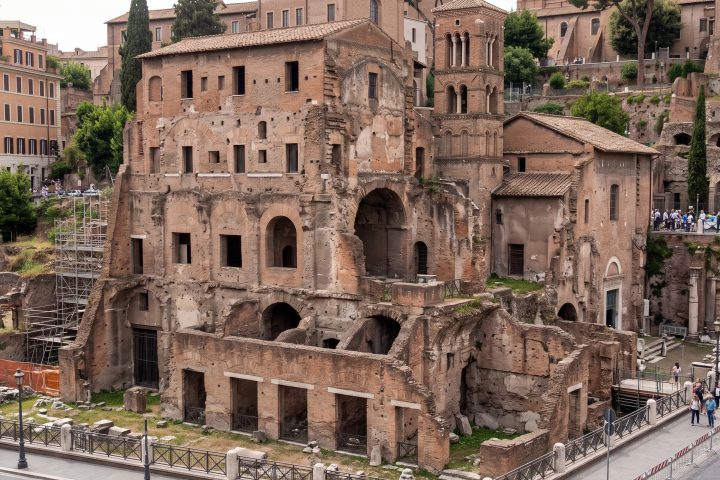
By the early fifth century, dress, diet, and building styles had changed beyond recognition, and many streets were quiet. Some families kept living among ruined walls, patching old halls with timber and reusing stone for new purposes.
Some historians suggest that people even lived among the ruins of public baths, using monumental spaces in improvised ways. Such details are vivid but should be treated cautiously, since evidence varies.
Villas, Villagers, and the Changing Countryside
The countryside tells a similar story. Roman villas, with their mosaics, heated floors, and wealthy owners, generally declined after direct rule ended and were eventually abandoned. These estates had depended on markets and tax-paying structures, and once those faded, a grand house made little economic sense.
Yet farming did not stop. People still had to eat, and fields still needed ploughing. The difference was scale and style. Instead of producing surpluses for distant buyers, communities increasingly focused on feeding themselves and paying local leaders.
Some villa buildings were repurposed for humbler uses, with workshops and hearths appearing in rooms that once held dining couches. It was less an apocalypse than a steady shrinking of horizons.
Food and household goods tell the same story. Pottery that was once mass produced and traded over long distances gave way to simpler, locally made wares, and imported luxuries became rare. Diets shifted as well, with fewer exotic foods reaching ordinary tables.
Even small details such as clothing fasteners and building methods drifted away from Roman habits, a reminder that culture is carried by supply chains as much as by ideas.
Who Defended Britain? Usurpers, Raiders, and Saxon Mercenaries
Insecurity was part of daily life. In 367, a coordinated attack sometimes called the Great Conspiracy saw Picts, Scots, and Saxons strike the province together. Britain also produced a series of ambitious usurpers, including Maximus in 383, who took troops and administrators across the Channel. Gildas, a sixth-century British writer, remembered this as a drain from which the island never recovered.
When central help vanished, local leaders had to find protection themselves. Later writers describe Britons hiring Saxon mercenaries, a practice already familiar to the late empire.
A pro-Roman faction is said to have appealed for aid to the Gaulish commander Aetius in the mid-fifth century, apparently without success. The picture is of communities improvising, arguing, and bargaining under pressure.
Did Roman Britain Walk Away From Rome?
Here historians divide. Theodor Mommsen argued in the nineteenth century that it was not Britain that gave up Rome but Rome that gave up Britain. Michael Jones took the opposite view, suggesting that Britain left Rome after repeated usurpers and weak administration pushed the Romano-British elite into revolt. The Greek writer Zosimus even describes the Britons expelling Roman officials around 409.
Both ideas may hold some truth. Britain was already at odds with imperial authority, and Rome was already stretched thin. The result was a mutual drifting apart rather than a clean break.
That nuance matters, because it shows that the people at the centre of this story were not helpless victims. They made choices, backed leaders, and tried to rescue what they could of a world they considered their own.
Pockets of Roman Life That Refused to Vanish
One of the most fascinating parts of life in Roman Britain after legions left is that not everything vanished at once. Some researchers argue that Roman ways lingered in certain places for generations, and that urban life at sites such as Calleva may have continued longer than once assumed. Saints and bishops also reached the island. Germanus of Auxerre is recorded visiting in 429 and honouring the shrine of St Albans.
Michael Wood reminded readers that the Romans did not simply abandon Britain and sail back to Italy. A way of life built over centuries could not be wiped away overnight.
Language, law, religion, and habits of dress remained part of Romano-British identity even as the infrastructure that supported them weakened. Many families probably continued to think of themselves as Roman for a long time.
The Rise of Post-Roman Britain
By the middle of the fifth century, the island was changing shape. Evidence suggests that a single ruler, traditionally linked with Vortigern, held wide influence for a time.
After about 460, local rivalries grew stronger, and regions increasingly decided their own futures. Archaeology shows Britons fortifying defensible places from about 450, reoccupying hillforts and building new strongholds.
This was the world of post-Roman Britain, a patchwork of small kingdoms, warbands, churches, and surviving estates. Over the following centuries, the Anglo-Saxon settlement transformed the political and cultural map. Historians debate how much was migration, how much was cultural change, and how much was local people adopting new identities. What is clear is that the Roman province had given way to something new.
What the Collapse Teaches Us Today
Why does this story keep fascinating us? Partly because it feels familiar. Complex societies depend on invisible systems, such as reliable money, safe roads, and trusted institutions.
When those systems fail together, ordinary comforts can disappear surprisingly fast. Britain’s experience was harsher than that of provinces like North Africa, where Roman urban culture survived for centuries.
Perhaps Roman identity in Britain was shallower, more recent, and more dependent on state support. Whatever the cause, the lesson is humbling. Prosperity is not guaranteed, and a civilisation can seem permanent right up until it is not. Studying the end of Roman rule invites us to look closely at what we take for granted today.
Conclusion
The story of life in Roman Britain after legions left is not a tale of one sudden exit. It is a drama of vanishing coins, emptying towns, empty villas, anxious negotiations, and stubborn pockets of Roman habit.
The soldiers departed, but millions of people stayed behind to adapt, argue, and survive. Their experience shows how quickly a connected world can unravel, and how long its echoes can last. The next time someone tells you the Romans simply went home in 410, you will know the truth: the real story is darker, richer, and far more human than that.

Enjoyed this? Send TheQuietOrigin a Spark
Be the first to send Sparks to this story.
Comments are for Silver members and up
Join the community to share your thoughts. Members keep the discussion friendly and spam-free.