
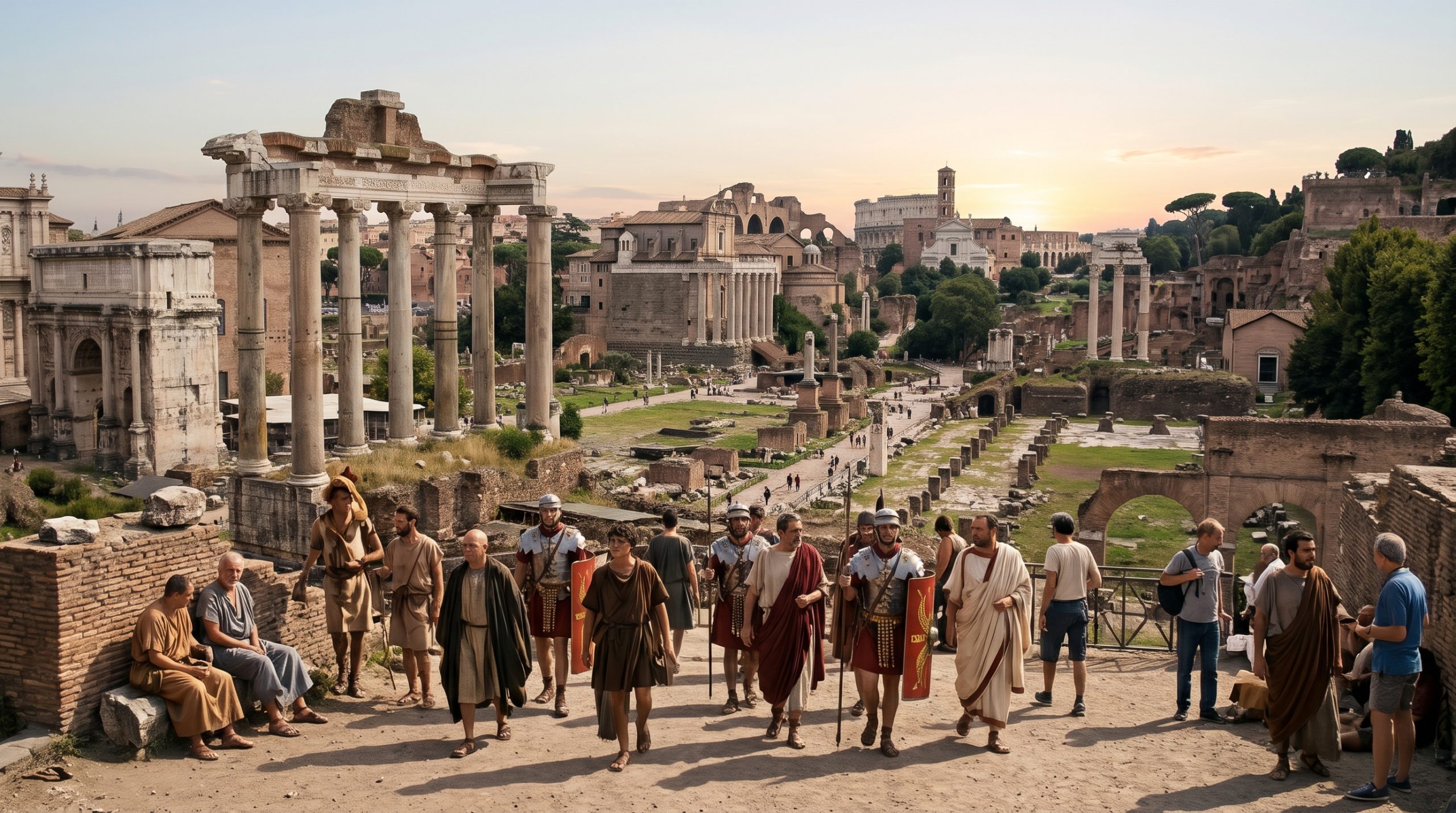
The rise and fall of the Roman Empire is one of the longest and most influential stories in history. A small city on the Tiber grew into a power that ruled the Mediterranean world, and its laws, language, roads and architecture still shape our lives. This timeline explains the main stages, from the Republic to the end of the Western Empire, in plain language.
The Early City and the Republic
Roman tradition says the city was founded in 753 BC, though historians treat the early stories as a mix of legend and history. According to tradition, Rome was first ruled by kings, and the monarchy was replaced by a republic around 509 BC. In the Republic, power was shared among elected officials called consuls, the Senate and popular assemblies.
Over the following centuries, Rome expanded across Italy and then beyond. Wars with Carthage, a powerful rival in North Africa, ended with Rome dominating the western Mediterranean. Conquests brought wealth, slaves and new territories, but also tension and inequality at home.
The Crisis of the Republic
As Rome grew, ambitious generals gained huge armies loyal to them personally. Political violence and civil wars became common. One of the most famous figures was Julius Caesar, whose rise and murder are covered in our article on the Ides of March. His death in 44 BC did not save the Republic. It led to another round of civil war.
Augustus and the Start of the Empire
Caesar’s adopted heir, Octavian, emerged victorious from the civil wars. In 27 BC, he received the title Augustus and is generally regarded as Rome’s first emperor. He kept many republican institutions on the surface while holding real power himself. His rule began a long period of relative stability often called the Pax Romana, or Roman Peace.
The Empire at Its Height
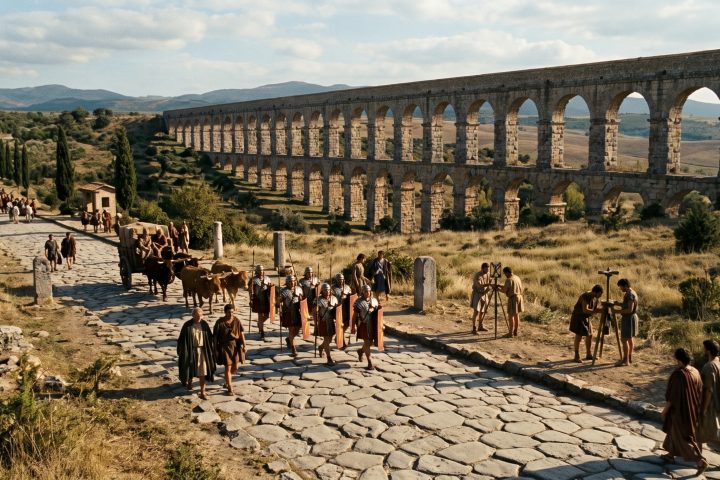
During the first and second centuries AD, the Empire reached its greatest extent, stretching from Britain to the Middle East and across North Africa. Trade, roads and a common legal system connected millions of people. City life flourished, and public entertainment, including the spectacle of gladiator games, became part of Roman culture. Impressive engineering, such as Roman concrete, made large public buildings possible.
Life in Roman towns could also end suddenly, as shown by the eruption that buried Pompeii in AD 79.
Crisis in the Third Century
In the third century AD, the Empire faced a series of serious problems: frequent changes of emperor, civil wars, economic strain and pressure on its borders. The Empire survived, but it was changed. Later emperors reorganised the government and the army to bring back stability.
Division and Decline in the West
Over time, the Empire became increasingly divided between a western and eastern half, each with its own administration. The Western half faced growing pressure from migrations and invasions, along with political instability and financial difficulties. Historians still debate how much each factor mattered, and there is no single accepted cause for the decline.
476 AD: The Traditional End of the Western Empire
The year 476 AD is traditionally given as the end of the Western Roman Empire, when the last western emperor, Romulus Augustulus, was removed by the Germanic leader Odoacer. For people at the time, the change was gradual, and many Roman institutions, laws and customs continued under new rulers.
The Eastern Empire Lives On
The Eastern Roman Empire, often called the Byzantine Empire, continued for nearly a thousand more years, with its capital at Constantinople. It ended in 1453, when the city fell to the Ottomans.
Key Dates at a Glance
| Date | Event |
|---|---|
| 753 BC | Traditional date for the founding of Rome |
| c. 509 BC | Traditional start of the Roman Republic |
| 44 BC | Julius Caesar is assassinated |
| 27 BC | Augustus becomes the first emperor |
| AD 79 | Vesuvius erupts and buries Pompeii |
| AD 476 | Traditional end of the Western Empire |
| AD 1453 | Fall of Constantinople and the end of the Eastern Empire |
Frequently Asked Questions
Why did the Roman Empire fall?
There is no single cause. Historians point to a mix of political instability, economic problems, military pressure and social change, and they continue to debate the relative weight of each.
Who was the first Roman emperor?
Augustus, who took that title in 27 BC, is generally regarded as the first emperor.
Did the Roman Empire end completely in 476 AD?
Only the Western Empire. The Eastern Empire continued until 1453.
Final Thoughts
The rise and fall of the Roman Empire was a slow process rather than a single event. Its legacy in law, language, engineering and politics is still visible today, which is why the story remains worth studying.
Dates for early Rome are traditional and approximate. Please verify specific dates and details against academic sources before publishing.
Comments are for Silver members and up
Join the community to share your thoughts. Members keep the discussion friendly and spam-free.